
The top long-term pain relief approaches are multimodal care (chiropractic or manual therapy combined with physical therapy and exercise), graded exercise and movement retraining, cognitive-behavioral pain self-management, and targeted lifestyle changes covering sleep, nutrition, weight, and stress. Used together, these consistently outperform any single treatment for chronic pain. Systematic reviews confirm that combining modalities produces more sustained functional gains than monotherapy, and clinical guidelines set realistic targets of moderate to substantial pain reduction alongside measurable improvements in daily function.
A moderate reduction in pain (about 30%) is considered a meaningful improvement, while greater reductions (up to 50%) represent substantial progress. Neither number means zero pain. The real goal is getting back to what matters: sleeping through the night, walking a measured distance, returning to work, or lifting groceries without bracing yourself.
What to do next:
- Find an evidence-informed chiropractor who builds a personalized multimodal plan with measurable goals
- Start graded movement today, even 5–10 minutes of walking counts
- Agree on functional goals with your clinician, not just a pain score
Table of Contents
- What does “long-term pain relief” actually mean?
- Which approaches have the strongest clinical evidence?
- How do clinicians build a personalized multimodal plan?
- How do you choose a chiropractor for long-term relief?
- What daily habits support long-term pain relief?
- What timeline and costs should you expect in the U.S.?
- Key Takeaways
- Why function matters more than the pain score
- Evertonchiropractic: evidence-informed care built around your goals
- Useful sources and further reading
- FAQ
What does “long-term pain relief” actually mean?
Success in chronic pain management techniques is not a pain score of zero. Clinical guidelines are explicit: the goal is improved quality of life, return to valued activities, and reduced flare frequency. Chasing complete elimination often leads to frustration and overtreatment.
Clinicians reframe progress around participation and self-efficacy. Can you walk to the mailbox? Sleep six hours without waking? Carry your groceries? Those are the metrics worth tracking.
- Moderate improvement: a moderate reduction in pain intensity
- Substantial improvement: a substantial reduction in pain intensity
- Functional milestones: return to work, recreational activity, or daily tasks without significant restriction
- Reduced flare frequency: fewer high-pain days per month over time
Pro Tip: Ask your clinician to translate your pain score into a daily-life goal at every visit. “My pain went from 7 to 5” means less than “I walked 20 minutes without stopping.” The second one tells you whether the treatment is actually working.
Which approaches have the strongest clinical evidence?
Systematic reviews consistently support several non-drug interventions for medium- to long-term functional improvement. Multimodal multidisciplinary rehab shows the most persistent gains at follow-up beyond 12 months. Here is what the evidence says for each major category:
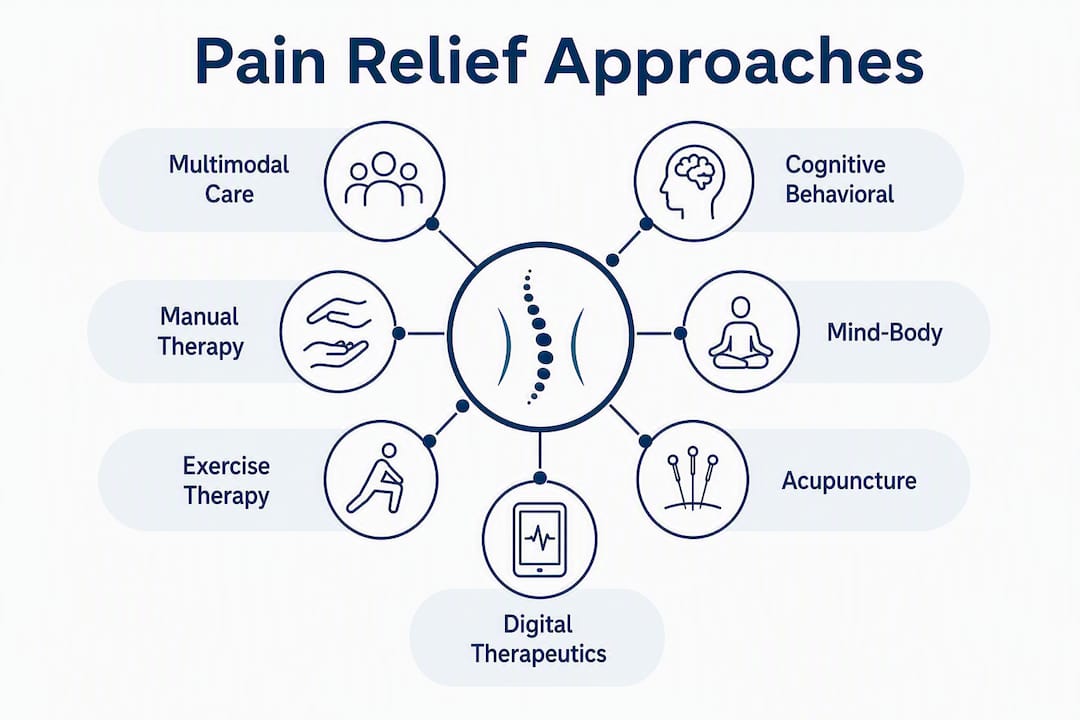
Multimodal / multidisciplinary rehabilitation. Combining manual care, exercise, and behavioral support produces more sustained functional gains than any single approach. It is the gold standard for persistent pain.
Spinal manual therapy and chiropractic adjustments. Evidence-informed spinal adjustments reduce pain and improve mobility in the short to intermediate term, creating a window for active rehabilitation. They work best as part of a broader plan, not as a standalone fix.
Exercise therapy and graded activity. Aerobic exercise, targeted strength work, and graded movement retraining all show consistent benefits for function and pain across musculoskeletal conditions. The dose matters less than consistency.

Cognitive-behavioral therapy (CBT) and pain self-management. CBT addresses fear-avoidance patterns and catastrophizing, both of which amplify pain signals. Noninvasive interventions including CBT show small-to-moderate effect sizes with low rates of serious harm.
Mind-body practices. Yoga and tai chi improve flexibility, balance, and pain tolerance. They are particularly useful for patients who struggle with high-intensity exercise early in rehab.
Acupuncture. Supported by systematic review evidence for several chronic pain conditions, particularly musculoskeletal and headache-related pain. Best used as an adjunct rather than a primary treatment.
Digital therapeutics and VR. FDA-cleared immersive VR programs like EaseVRx have shown pain reduction and reduced fear of movement in select patients. These are emerging adjuncts, not replacements for in-person care.
Long-term opioid therapy carries high adverse-effect rates and limited evidence of superiority over nonopioid strategies for chronic musculoskeletal pain. Non-pharmacological approaches carry a far lower risk profile for long-term use.
How do clinicians build a personalized multimodal plan?
A high-quality chiropractic plan is staged, not static. The clinician starts with a thorough assessment and builds a plan that evolves as you improve. Here is what that typically looks like:
- Assessment and goal-setting. Physical exam, functional outcome measures, review of imaging if relevant, and shared decision-making to set SMART goals tied to your daily life.
- Short-term symptom control. Manual therapy, soft-tissue work, and targeted adjustments to reduce pain and restore initial mobility. This is the window phase.
- Active rehabilitation. Graded exercise, movement retraining, and introduction of self-management skills. The patient becomes an active participant, not a passive recipient.
- Maintenance and prevention. Reduced visit frequency, home program reinforcement, and proactive spinal maintenance to prevent recurrence.
A personalized multimodal approach also incorporates lifestyle supports: anti-inflammatory nutrition, sleep hygiene, and stress management. Coordinated referrals to a physical therapist or psychologist are a sign of quality care, not a limitation of chiropractic scope.
Realistic functional milestones at 6–12 weeks include lifting moderate loads, walking 20–30 minutes, and returning to part-time work. Full return to sport or heavy labor may take 3–6 months.
How do you choose a chiropractor for long-term relief?
Prioritize evidence-informed, outcome-focused chiropractors who use multimodal plans and measure progress with validated tools, not just pain scores.
What to look for:
- State licensure and postgraduate training in rehabilitation or pain science
- Use of validated outcome measures (Oswestry, PSFS, or similar)
- Willingness to set measurable functional goals with you
- Collaborative referrals to physical therapy or behavioral health when indicated
- Personalized treatment plans rather than identical protocols for every patient
Questions to ask at your first visit:
- How will you assess my condition and measure progress?
- What is a realistic timeline for my goals?
- How does exercise and self-management fit into my plan?
- When would you refer me to another provider?
Red flags to watch for:
- Guaranteed “cures” or promises of complete pain elimination
- Pressure to purchase long-term packages before any measurable goals are set
- One-size-fits-all treatment with no functional outcome tracking
- Dismissal of imaging, diagnostics, or other providers when they are clearly indicated
Evertonchiropractic, led by Dr. Richard, builds evidence-informed plans tailored to each patient’s lifestyle and goals, with a focus on long-term function rather than short-term symptom suppression.
What daily habits support long-term pain relief?
Consistent daily movement, graded exercise, sleep hygiene, anti-inflammatory nutrition, and stress-management skills are what lock in treatment gains between clinic visits. Manual therapy opens the door; your daily habits keep it open.
Movement and exercise:
- Graded walking: start with 5–10 minutes daily and increase by 2–3 minutes per week
- Spinal mobility drills for the spine, hips, and shoulders, performed daily
- Basic strength work (bodyweight squats, bridges, bird-dogs) 2–3 times per week
- Stop and consult your clinician if a movement causes sharp, radiating, or worsening pain
Behavioral self-management:
- Activity pacing: break tasks into smaller segments rather than pushing through and crashing
- Thought reframing: challenge catastrophic thoughts about pain using simple CBT techniques
- Gradual exposure to feared movements, guided by your clinician
- Sleep routine: consistent bedtime and wake time, no screens 30 minutes before bed
Pro Tip: Use the 24–48 hours after an adjustment, when pain is reduced and mobility is improved, to practice the movement patterns your clinician prescribed. That window is when new movement habits take hold most effectively.
Injury prevention habits, including conditioning and recovery practices, also apply to everyday patients: consistent warm-up, progressive load increases, and adequate sleep all reduce flare-up risk.
What timeline and costs should you expect in the U.S.?
Expect measurable improvement within weeks to months during active rehab, and long-term maintenance over months to years depending on your condition and adherence.
| Phase | Typical Duration | Session Frequency | General U.S. Cost Range |
|---|---|---|---|
| Initial assessment | 1 visit | Once | $100 per visit |
| Active rehab | 4–12 weeks | 1–3 times per week | $60 per session |
| Transition to maintenance | 3–6 months | 2–4 times per month | $60 per session |
| Long-term maintenance | Ongoing | Monthly or as needed | $60 per session |
These are general U.S. ranges, not firm quotes. Actual costs vary by location, provider, and condition.
Multimodal rehabilitation yields small but more persistent functional gains at intermediate and long-term follow-up compared with single-modality care or usual care alone.
Insurance notes: Physical therapy is commonly covered under most U.S. health plans. Chiropractic coverage varies significantly by insurer and plan; many plans cap annual visits. Out-of-pocket costs are common for maintenance care. Always verify your benefits before starting a course of treatment.
Key Takeaways
Multimodal, evidence-informed care combining chiropractic treatment, graded exercise, and self-management skills consistently produces the most sustained long-term pain relief, with clinical targets of moderate to substantial pain reduction and measurable functional improvement.
| Point | Details |
|---|---|
| Multimodal care wins | Combining manual therapy, exercise, and behavioral skills produces more sustained gains than any single treatment. |
| Realistic outcome targets | Aim for 30% (moderate) to 50% (substantial) pain reduction alongside functional milestones, not zero pain. |
| Patient role is critical | Daily movement, sleep hygiene, and self-management skills between visits lock in treatment gains. |
| Choose wisely | Prioritize chiropractors who set measurable goals, use validated outcome measures, and refer when needed. |
| Evertonchiropractic | Offers personalized, evidence-informed plans focused on long-term function, mobility, and pain management. |
Why function matters more than the pain score
Most people walk into a clinic wanting their pain gone. That goal is understandable, but it often sets patients up for disappointment and, worse, keeps them passive in their own recovery.
The evidence is consistent: patients who reframe success around what they can do rather than what they feel tend to improve faster and maintain those gains longer. A pain score is a snapshot. Functional capacity is the story. When a patient tells me they slept through the night for the first time in months, or walked their dog around the block, that tells me far more about whether a plan is working than any number on a scale.
What I see most often in long-term cases is that the treatment itself is rarely the limiting factor. The gap is almost always in the daily habits between visits. Manual care creates the conditions for change. The patient has to show up for the rest of it.
Evertonchiropractic: evidence-informed care built around your goals
Chronic pain does not respond well to generic protocols. Evertonchiropractic offers something more specific: an evidence-informed assessment that maps your condition, your daily function, and your personal goals into a staged, personalized plan.
Dr. Richard and the team at Evertonchiropractic combine spinal adjustments with mobility training, movement retraining, and coordinated referrals when needed. Whether you are managing lower back pain, sciatica, neck pain, or shoulder stiffness, the plan is built around what you want to get back to doing, not just reducing a number on a pain scale. For patients dealing with nerve-related pain, the clinic’s nerve pain relief approach targets the underlying cause rather than masking symptoms.
Book an initial assessment at Evertonchiropractic and leave with a clear plan, measurable goals, and a realistic timeline.
Useful sources and further reading
- Noninvasive Nonpharmacological Treatment for Chronic Pain: A Systematic Review Update (NCBI Bookshelf) — A large systematic review synthesizing evidence for exercise, multidisciplinary rehab, acupuncture, CBT, and mind-body practices; used throughout this article for effect-size and modality evidence.
- SIGN 173: Management of Chronic Pain (Scottish Intercollegiate Guidelines Network) — Clinical practice guideline defining meaningful improvement benchmarks (30–50% pain reduction) and recommending shared decision-making and self-management; used for outcome definitions and goal-setting guidance.
- Chronic Pain: StatPearls (NCBI Bookshelf) — Comprehensive clinical reference covering pharmacological and nonpharmacological options, opioid risks, and the rationale for multimodal care; used for safety comparisons and monotherapy limitations.
- An Update on Non-Pharmacological Interventions for Pain Relief (PMC) — Recent review covering CBT, digital therapeutics, VR, and neuromodulation; used for emerging adjunct technology and safety-profile data.
- Personalized Multimodal Lifestyle Approach for Chronic Pain (University of Warwick) — Research paper on tailoring manual care, nutrition, sleep, and stress management to individual triggers; used for the personalization rationale and the mobility-window concept.
- Non-Drug Pain Management (MedlinePlus) — U.S. National Library of Medicine patient resource covering acupuncture, biofeedback, physical therapy, and relaxation; used as a reference for non-pharmacological modality descriptions.
FAQ
What is the most effective long-term approach to chronic pain?
Multimodal care combining manual therapy, graded exercise, and behavioral self-management skills consistently outperforms single treatments in systematic reviews. No single modality matches the sustained functional gains of a combined plan.
How long does it take to see real improvement?
Most patients notice measurable improvement within 4–12 weeks of active rehab, with longer-term maintenance continuing over months to years depending on the condition and adherence to a home program.
Is chiropractic care safe for long-term pain management?
Yes, for most musculoskeletal conditions. Noninvasive interventions including spinal manual therapy show low rates of serious harm, making them a favorable option compared with long-term pharmacologic therapy.
What red flags should I watch for in a chiropractor?
Avoid practitioners who guarantee complete pain elimination, pressure you into long-term packages without measurable goals, or use identical protocols for every patient regardless of condition or progress.
Does Evertonchiropractic offer personalized long-term pain plans?
Yes. Evertonchiropractic builds individualized, evidence-informed plans that combine spinal adjustments, mobility training, and movement retraining, with goals tied to your daily function and lifestyle.
Recommended
- Find a Chiropractor for Long-Term Pain Relief – Everton Chiropractic
- The Ultimate Guide to Lasting Lower Back Pain Relief Without Medication – Everton Chiropractic
- The Dangers of Relying on Painkillers for Chronic Lower Back Pain – Everton Chiropractic
- Spinal Adjustments for Pain Relief: What the Evidence Shows – Everton Chiropractic