
Chiropractic care is defined as the clinical assessment and treatment of spinal and joint dysfunction using spinal manipulative therapy, soft tissue techniques, and rehabilitative exercise. For seniors, this means a direct path to better movement. How chiropractic restores senior mobility comes down to one core mechanism: correcting spinal misalignments that compress nerves, restrict joints, and generate the chronic pain that keeps older adults sedentary. A systematic review of 7 RCTs involving more than 1,226 patients found spinal manipulative therapy delivers benefits comparable to or better than other treatments for chronic spinal pain in adults aged 64–75. That evidence base makes chiropractic one of the strongest non-drug options available for seniors managing mobility issues today.
How chiropractic adjustments improve joint function and reduce pain
Spinal manipulative therapy works by restoring normal movement to joints that have become stiff, compressed, or misaligned. When a joint loses its full range of motion, the surrounding muscles compensate by tightening, which creates a cycle of pain and restricted movement. A chiropractic adjustment breaks that cycle by applying a controlled force to the affected joint, restoring motion and reducing nerve irritation.
Chiropractors use several techniques depending on the senior’s condition and physical status:
- Manual spinal manipulation: A hands-on, high-velocity thrust applied to a specific vertebral segment. Effective for adults with good bone density and no contraindications.
- Instrument-assisted adjustment: A handheld device delivers a precise, low-force impulse. Preferred for seniors with arthritis or reduced tolerance for manual pressure.
- Flexion-distraction: A gentle, rhythmic traction technique performed on a specialized table. Particularly effective for lumbar spinal stenosis, one of the most common causes of walking difficulty in older adults.
- Soft tissue therapy: Targeted muscle work that releases tension in the muscles surrounding restricted joints, improving overall movement quality.
The 2026 systematic review confirmed that these approaches produce meaningful improvements in both pain levels and physical function for seniors with neck pain and lumbar spinal stenosis. Pain reduction matters because it is the primary reason seniors stop moving. Less pain means more movement, and more movement means stronger muscles and better balance.
Pro Tip: Ask your chiropractor which specific technique they plan to use and why. A good practitioner will explain the choice based on your bone density, medications, and current pain levels, not just habit.
Is chiropractic care safe for elderly patients?
Safety is the first question most seniors ask, and the evidence answers it clearly. A review of 25 studies found no serious complications after chiropractic treatments in elderly patients. Mild soreness after an adjustment is common, but it typically resolves within 24–48 hours, similar to the feeling after light exercise.
The comparison with conventional medical care is striking. Older Medicare beneficiaries receiving chiropractic care experienced 40 injury incidents per 100,000 patients, compared to 153 incidents per 100,000 for primary care patients. That difference reflects both the nature of chiropractic treatment and the thorough screening process that precedes it.
A responsible initial assessment for a senior patient covers:
- Bone density status: Osteoporosis changes which techniques are appropriate and at what force level.
- Medication review: Anticoagulants, corticosteroids, and blood pressure medications all affect treatment decisions.
- Vascular health: Screening for conditions that could make certain neck adjustments inadvisable.
- Comorbidities: Diabetes, cardiovascular disease, and neurological conditions shape the overall care plan.
Seniors with low bone density or significant frailty receive adapted low-force techniques rather than traditional high-velocity thrusts. Instrument-assisted adjustments and flexion-distraction are standard tools in this context. The goal is to achieve the same joint mobility improvement with a fraction of the mechanical force.
Pro Tip: Bring a complete list of your medications and any recent bone density scans to your first appointment. This single step allows your chiropractor to design a safe plan from session one.
How does chiropractic help seniors with balance and staying active?
Chiropractic care does more than reduce pain. It directly improves the body’s ability to sense and control its own position in space, a function called sensorimotor integration. Research shows that chiropractic adjustments improve ankle joint position sense, stepping reaction time, and physical quality of life. These are the exact physical qualities that determine whether a senior can walk confidently, climb stairs, or recover from a stumble without falling.
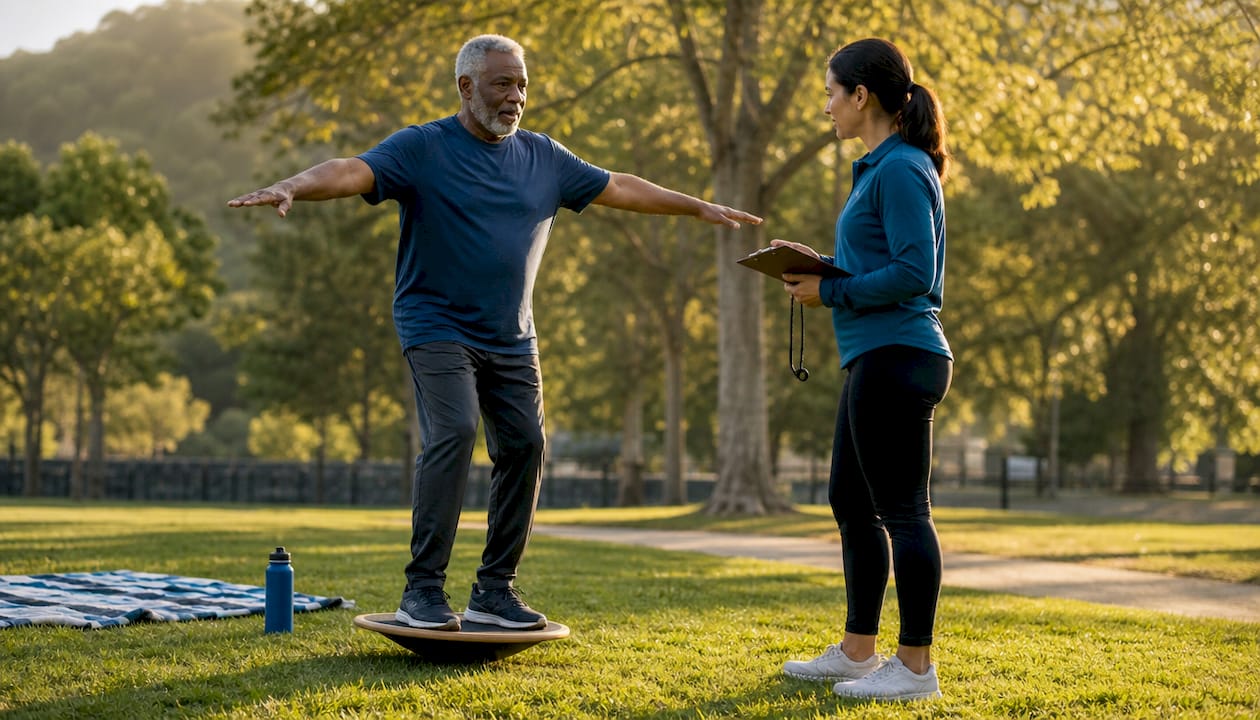
The neurological explanation is significant. Chiropractic adjustments influence brain regions involved in movement coordination, including the prefrontal cortex. Better neural signaling between the spine and the brain means faster, more accurate muscle responses during everyday movement.
Pain reduction also breaks a damaging behavioral pattern that many seniors fall into:
- Chronic pain leads to reduced movement.
- Reduced movement causes muscle weakness and joint stiffness.
- Weakness and stiffness increase pain and fall risk.
- Increased fall risk creates fear of movement, known as kinesiophobia.
Kinesiophobia is a major barrier to senior mobility. When pain decreases after chiropractic care, seniors regain the confidence to walk longer distances, attend exercise classes, and perform daily tasks like grocery shopping or gardening. These activities then reinforce the physical gains made in the clinic. The result is a positive cycle that replaces the negative one.
Seniors who receive consistent chiropractic care commonly report returning to activities like morning walks, swimming, and light yard work. These are not trivial outcomes. They represent the difference between living independently and requiring daily assistance.
What role does chiropractic play in managing chronic spinal conditions?
Chiropractic care works best as part of a broader plan, not as a standalone fix. The evidence consistently shows that combining spinal manipulative therapy with targeted exercise produces better outcomes than either approach alone. Exercise reinforces the joint mobility gains from adjustments and rebuilds the muscle strength that protects the spine between sessions.
The contrast with pharmacologic treatment is worth understanding clearly. Long-term opioid use carries serious risks for seniors, including falls, cognitive impairment, and dependency. Chiropractic care offers a non-drug alternative that avoids the compounding risks of polypharmacy, which affects a large proportion of older adults managing multiple conditions simultaneously.
Realistic goals for senior chiropractic care look like this:
- Reduce pain to a manageable level so that daily activities become possible again.
- Restore joint range of motion in the spine, hips, and shoulders to support functional movement.
- Improve balance and coordination to reduce fall risk.
- Maintain functional gains through a consistent maintenance schedule.
- Support an active lifestyle by keeping the musculoskeletal system capable of tolerating regular movement.
The concept of maintenance care is central to managing senior mobility issues long-term. Because degenerative changes in the spine are not reversible, the realistic goal is functional optimization, not structural cure. Maintenance visits every 2–4 weeks help seniors sustain the improvements they achieve during an initial treatment course.
| Treatment approach | Role in senior care |
|---|---|
| Spinal manipulative therapy | Restores joint motion and reduces nerve-related pain |
| Instrument-assisted adjustment | Delivers low-force correction for frail or osteoporotic patients |
| Flexion-distraction | Relieves lumbar spinal stenosis and disc-related leg pain |
| Therapeutic exercise | Builds muscle support and reinforces chiropractic gains |
| Maintenance care schedule | Sustains functional improvements over months and years |
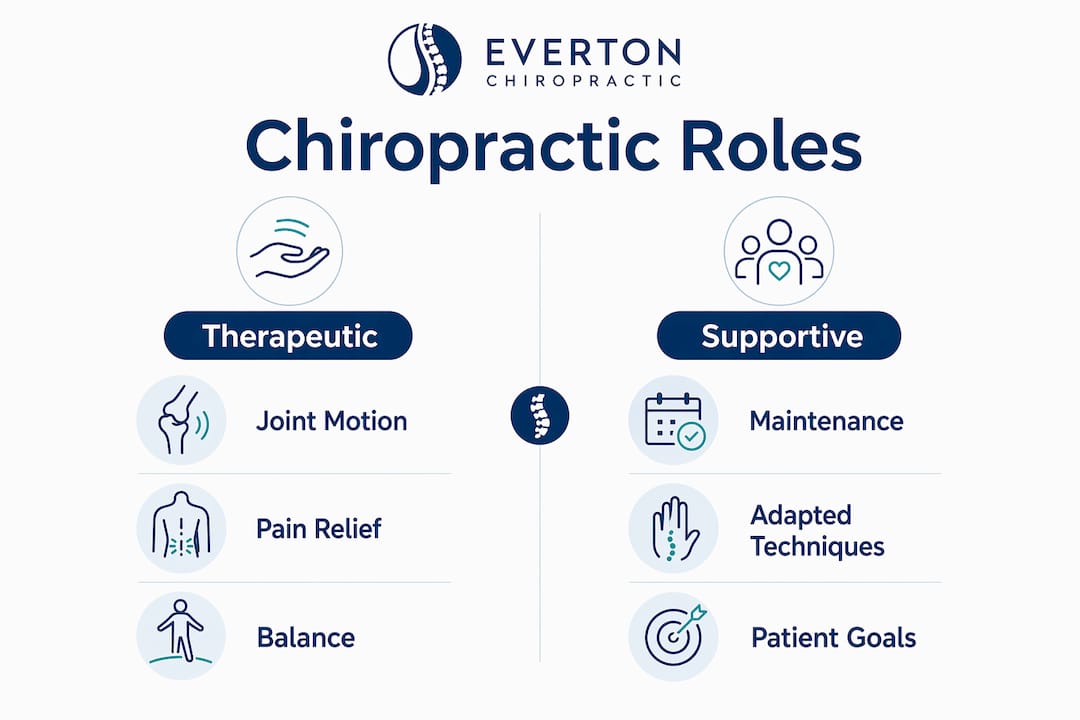
Patient-centered goal-setting matters as much as the technique itself. A senior whose goal is to walk to the park daily needs a different plan than one who wants to return to recreational golf. Evertonchiropractic builds care plans around each patient’s specific functional goals, not a generic protocol.
Key Takeaways
Chiropractic care restores senior mobility by correcting spinal dysfunction, reducing pain, and improving balance through evidence-based techniques adapted for aging bodies.
| Point | Details |
|---|---|
| Spinal manipulative therapy works | A 2026 review of 7 RCTs confirmed SMT improves pain and function in seniors aged 64–75. |
| Safety is well-established | A review of 25 studies found no serious complications in elderly chiropractic patients. |
| Adapted techniques protect frail patients | Instrument-assisted and flexion-distraction methods deliver results without high-velocity force. |
| Balance and fall risk improve | Chiropractic adjustments enhance sensorimotor integration, stepping reaction time, and coordination. |
| Maintenance care sustains gains | Visits every 2–4 weeks help seniors maintain functional mobility over the long term. |
Why I think most seniors wait too long to try chiropractic
The seniors I see who benefit most from chiropractic care share one thing in common: they wish they had started sooner. Most waited until pain became severe enough to limit daily life. By that point, muscle weakness, postural changes, and fear of movement had already compounded the original problem.
The conventional assumption is that stiffness and pain are just part of getting older. That assumption is wrong, and the 2026 research makes it harder to defend. Degenerative changes in the spine are real and irreversible, but the functional consequences of those changes are not fixed. Pain levels, joint mobility, and balance all respond to the right treatment.
What I find most underappreciated is the neurological side of chiropractic care. Seniors and their families focus on pain relief, which is understandable. But the improvements in balance, reaction time, and movement confidence are often what make the biggest difference to daily independence. A senior who moves without fear is a senior who stays active, and staying active is the single most powerful thing an older adult can do for long-term health.
The therapeutic relationship also matters more than most clinical discussions acknowledge. Seniors who feel heard and understood by their chiropractor follow through with care plans, do their home exercises, and return for maintenance visits. That consistency is what separates meaningful long-term improvement from short-term relief. Chiropractic is not a quick fix. It is a long-term investment in the quality of your movement and your life.
— Aman
Evertonchiropractic’s approach to senior mobility care
Evertonchiropractic, led by Dr. Richard, specializes in gentle, adapted chiropractic care designed specifically for seniors who want to move better and stay independent. Every patient begins with a thorough assessment that covers bone density, medications, and personal mobility goals before any treatment begins.
Dr. Richard uses instrument-assisted adjustments, flexion-distraction, and soft tissue therapy to deliver results safely, regardless of age or physical condition. The clinic’s care plans are built around what each patient actually wants to do, whether that is walking without pain, playing with grandchildren, or simply getting through the day without stiffness. If you are ready to address the root cause of your mobility challenges, the senior mobility and pain relief guide is a strong place to start. You can also learn more about spinal adjustments and the evidence behind them before booking your first visit.
FAQ
What does chiropractic do for senior mobility?
Chiropractic care corrects spinal misalignments that restrict joint movement and compress nerves, reducing pain and restoring the range of motion seniors need for daily activities. A 2026 systematic review confirmed meaningful improvements in both pain and physical function for older adults receiving spinal manipulative therapy.
Is chiropractic safe for seniors with osteoporosis?
Yes, when adapted techniques are used. Chiropractors screen for osteoporosis at the first visit and switch to low-force methods like instrument-assisted adjustments or flexion-distraction, which deliver results without the mechanical load of traditional high-velocity thrusts.
How many chiropractic sessions does a senior need?
An initial treatment course typically addresses acute pain and restores baseline function, followed by maintenance visits every 2–4 weeks to sustain gains. The exact number depends on the severity of the condition and the patient’s personal mobility goals.
Can chiropractic reduce fall risk in seniors?
Research shows chiropractic adjustments improve ankle joint position sense and stepping reaction time, both of which directly reduce fall risk. Better sensorimotor integration means the body responds faster and more accurately to balance challenges during everyday movement.
Does chiropractic replace medication for senior pain management?
Chiropractic care is a non-drug alternative that reduces reliance on pain medications, particularly for chronic spinal conditions. Medicare data shows chiropractic patients experience significantly fewer adverse events than primary care patients, making it a lower-risk option for long-term pain management.