
Chiropractic care prevents degeneration primarily by preserving joint mobility and reducing pain, not by reversing structural wear. The clinical term for this goal is functional preservation, and it is the most realistic and evidence-supported outcome of regular chiropractic treatment. Understanding how chiropractic prevents degeneration means separating what the research actually shows from what marketing often overpromises. Spinal adjustments, rehabilitation exercises, and lifestyle guidance work together to keep you moving, reduce disability, and slow the avoidable decline that comes from inactivity and poor biomechanics.
How chiropractic adjustments maintain joint mobility
Restricted joints develop scar tissue adhesions over time. These adhesions limit range of motion, alter load distribution across the joint, and accelerate the wear patterns that lead to degenerative conditions like osteoarthritis and degenerative disc disease. Chiropractic adjustments introduce controlled motion into those restricted segments, breaking down adhesions before they become permanent.
Chiropractic adjustments restore motion to restricted joints and promote even load distribution, which reduces the excessive pressure that drives degenerative patterns. Think of it like a door hinge that stops being used. Left alone, it rusts and seizes. Regular movement keeps it functional. Your spinal joints work the same way.

Regular assessments also matter beyond the adjustment itself. Early joint stiffness identification through routine chiropractic care encourages ongoing motion that sustains tissue health over months and years. Catching a restriction early costs far less effort than rehabilitating a joint that has been locked down for a decade.
Key mechanisms chiropractic uses to protect joint health:
- Restoring segmental motion to reduce adhesion formation
- Redistributing mechanical load across joint surfaces
- Reducing muscle guarding that compresses joint spaces
- Stimulating synovial fluid circulation, which nourishes cartilage
- Identifying postural imbalances before they become structural problems
Pro Tip: If you sit at a desk for more than six hours a day, ask your chiropractor to assess your thoracic spine specifically. Thoracic restriction is one of the most overlooked contributors to early cervical and lumbar degeneration.
What does the research say about chiropractic and degeneration?
The evidence is more nuanced than most clinic brochures suggest. A Cochrane review of 26 randomized controlled trials found that spinal manipulative therapy produces small, short-term improvements in pain and function for chronic low back pain. The certainty for long-term structural outcomes is rated very low. That finding matters because it tells you what chiropractic reliably does and what it does not.
Harvard Health confirms there is currently no compelling evidence that joint deterioration from osteoarthritis can be slowed or stopped by any medication or manual therapy. No treatment currently reverses cartilage loss. Chiropractic is not an exception to that rule.
What chiropractic does deliver is meaningful functional improvement. A BMC Complementary Medicine study found that adding chiropractic to usual care improved sleep quality significantly at 52 weeks, with small but real differences in pain and disability scores. Sleep quality matters more than most people realize. Poor sleep accelerates inflammation, reduces tissue repair, and makes people less likely to exercise, all of which speed up degeneration indirectly.
| Strategy | Structural Prevention | Functional Benefit | Evidence Level |
|---|---|---|---|
| Weight management | Reduces joint load directly | Improves mobility and reduces pain | Strong |
| Exercise and movement | Maintains cartilage nutrition | Preserves range of motion | Strong |
| Chiropractic adjustments | No proven structural effect | Reduces pain, disability, and stiffness | Moderate |
| Anti-inflammatory medication | No structural prevention | Short-term pain relief | Moderate |
| Injury prevention | Reduces trauma-driven degeneration | Maintains joint integrity | Strong |
The table above reflects what the Arthritis Foundation and Harvard Health both emphasize: risk factor management is the primary lever for slowing degeneration. Chiropractic fits into that picture as a tool for functional maintenance, not structural reversal.
How chiropractic works with exercise and lifestyle for joint health
Exercise is the single most evidence-supported strategy for preserving joint function as you age. The Arthritis Foundation identifies exercise as the primary tool for symptom management and joint preservation, ahead of any manual therapy or medication. Chiropractic care works best when it supports your ability to exercise, not when it replaces it.
Chiropractors trained in rehabilitation integrate targeted exercises directly into care plans. The Cochrane review recommends combining spinal adjustments with rehab exercises for better long-term results, because manual therapy alone has limited evidence for meaningful outcomes beyond the short term. The adjustment gets you moving. The exercise keeps you moving.
Here is a practical framework for combining chiropractic care with lifestyle habits that protect your joints long term:
- Walk 30 minutes daily. Low-impact movement circulates synovial fluid and maintains cartilage nutrition without overloading worn joints.
- Strengthen your posterior chain. Glutes, hamstrings, and spinal erectors reduce compressive load on lumbar discs. Ask your chiropractor for specific exercises.
- Maintain a healthy body weight. Every pound of excess weight adds roughly four pounds of force to your knee joints during walking.
- Set up an ergonomic workspace. Monitor height, chair support, and keyboard position directly affect cervical and thoracic loading patterns. Evertonchiropractic provides posture and ergonomic guidance as part of its care approach.
- Avoid prolonged static postures. Set a timer to move every 45 minutes if you work at a desk.
- Protect joints during sport. Proper warm-up, technique coaching, and load management prevent the acute injuries that accelerate degeneration.
Pro Tip: Tell your chiropractor what sport or physical activity you do regularly. A good care plan is built around your actual movement demands, not a generic protocol.
Massage therapy also complements this approach. Soft tissue work alongside chiropractic reduces muscle tension that contributes to joint compression, making adjustments more effective and longer-lasting.
Why functional preservation matters more than structural reversal
Functional preservation is defined as maintaining your ability to move, work, sleep, and live actively despite the presence of degenerative changes. It is a more achievable and more meaningful goal than structural reversal, which no current therapy can reliably deliver.
Clinical trials measuring chiropractic outcomes show consistent improvements in pain scores, disability indexes, and sleep quality over time. The BMC study tracking outcomes at 52 weeks illustrates that benefits evolve and deepen with continued care. Short-term pain relief is the entry point. Sustained functional capacity is the real prize.
Functional indicators worth tracking with your chiropractor:
- Disability scores (tools like the Oswestry Disability Index for back pain)
- Active range of motion measurements at each visit
- Sleep quality and duration over weeks
- Daily step count and activity tolerance
- Frequency and intensity of pain episodes
Staying active is itself a degeneration prevention strategy. Reduced pain and disability from chiropractic encourage more movement, which functionally preserves joints better than any direct structural effect can. The logic is circular in the best way. Less pain means more movement. More movement means slower degeneration.
“The goal of chiropractic care in the context of degeneration is not to turn back the clock. It is to keep the clock running well.”
Evertonchiropractic, led by Dr. Richard, frames this clearly in its clinical approach. The clinic challenges the idea that physical decline is inevitable, not by promising structural reversal, but by building personalized plans that keep patients active and functional as they age. You can learn more about why spinal health matters long term through their published resources.
Common misconceptions about chiropractic and degeneration prevention
The most damaging misconception is that chiropractic can stop or reverse osteoarthritis or degenerative disc disease at a structural level. It cannot. No medication or manual therapy currently stops OA progression. Patients who expect structural reversal often discontinue care prematurely when they do not see it on imaging, missing the real functional benefits they are receiving.
Misconceptions that lead to poor decisions:
- “If my MRI still shows degeneration, chiropractic isn’t working.” MRI findings do not correlate reliably with pain or function. Many people with severe imaging findings have minimal symptoms and vice versa.
- “I only need chiropractic when I’m in pain.” Waiting for pain means waiting for restriction and adhesion to already be established. Preventive care is more effective than reactive care.
- “Chiropractic alone is enough.” Manual therapy alone has limited long-term evidence. Exercise and lifestyle changes are non-negotiable partners.
- “More adjustments always mean better results.” Frequency should match your clinical picture, not a fixed schedule. A good chiropractor adjusts your care plan as your function improves.
- “Chiropractic is only for back pain.” Spinal health affects whole-body biomechanics, including hip, knee, and shoulder loading patterns relevant to preventing joint degeneration throughout the body.
Setting realistic expectations from the first appointment protects you from disappointment and keeps you engaged in the care that actually works. Ask your chiropractor to define success in functional terms, not imaging terms.
Key takeaways
Chiropractic prevents degeneration by preserving joint mobility and reducing pain, enabling the sustained movement that protects joints far more than any structural intervention can.
| Point | Details |
|---|---|
| Functional preservation is the goal | Chiropractic maintains mobility and reduces disability rather than reversing structural wear. |
| Exercise must accompany adjustments | Cochrane evidence shows combined care outperforms manual therapy alone for long-term outcomes. |
| Risk factors drive degeneration | Weight management, injury prevention, and activity are the primary levers for slowing joint decline. |
| Track function, not just pain | Disability scores, range of motion, and sleep quality reveal chiropractic benefits better than short-term pain relief. |
| Realistic expectations protect outcomes | Patients who understand functional goals stay engaged in care and gain more lasting benefit. |
What i’ve learned from watching patients prioritize function over fear
I’ve seen two kinds of patients walk through the door. The first comes in terrified by their MRI report, convinced the word “degeneration” means they are falling apart. The second comes in asking one question: “What can I do to keep moving?” The second group almost always does better.
The research backs this up, but so does watching people over years of care. The patients who combine regular adjustments with consistent exercise, who track how far they can walk or how well they sleep rather than obsessing over imaging, are the ones who stay active into their 60s, 70s, and beyond. Structural findings on a scan tell you very little about how someone actually functions.
My honest view is that chiropractic’s greatest value in degeneration prevention is not the adjustment itself. It is the relationship it creates between a patient and their own body. Regular check-ins build body awareness. That awareness leads to earlier intervention when something changes. Earlier intervention prevents the kind of chronic restriction that genuinely accelerates decline.
The role of chiropractic in injury prevention is underappreciated for exactly this reason. Preventing the acute injuries that trigger accelerated degeneration is worth more than any reactive treatment. If you are serious about long-term mobility, start before the pain does.
— Aman
How Evertonchiropractic supports your long-term joint health
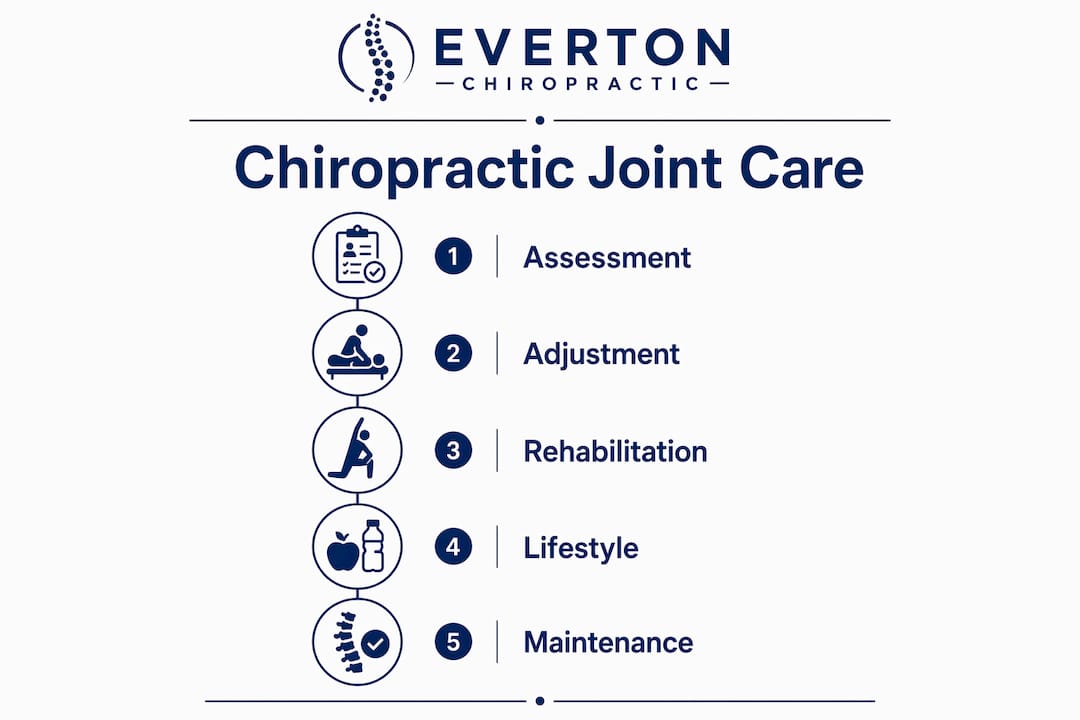
Evertonchiropractic, led by Dr. Richard, builds care plans around your actual lifestyle and movement goals, not a one-size-fits-all protocol. The clinic combines spinal adjustments with rehabilitation guidance and posture correction to address the root causes of joint stress before they become degenerative problems.

Whether you are managing early signs of spinal stiffness, recovering from a flare-up, or simply committed to staying active as you age, Evertonchiropractic offers evidence-informed care that fits your goals. For those dealing with neck pain or headaches linked to spinal tension, the clinic’s neck pain and headaches care program is a strong starting point. If lower back pain is your primary concern, their lasting lower back pain relief resource outlines exactly what to expect from a structured care approach.
FAQ
Can chiropractic stop osteoarthritis from progressing?
No. Harvard Health confirms no medication or manual therapy currently stops osteoarthritis progression at a structural level. Chiropractic reduces pain and maintains mobility, which helps you stay active and slows avoidable functional decline.
How often should i see a chiropractor for degeneration prevention?
Frequency depends on your clinical picture and activity level. Preventive care typically involves less frequent visits than acute treatment. Your chiropractor should reassess and adjust your schedule as your function improves.
Does chiropractic work better with exercise?
Yes. The Cochrane review of 26 RCTs recommends combining spinal adjustments with rehabilitation exercises for better long-term outcomes. Manual therapy alone has limited evidence for sustained benefit beyond the short term.
What is functional preservation in chiropractic care?
Functional preservation means maintaining your ability to move, work, and stay active despite degenerative changes. Clinical trials show chiropractic improves disability scores, range of motion, and sleep quality over time, all markers of preserved function.
Is chiropractic safe for people with existing joint degeneration?
Chiropractic is generally considered safe for people with degenerative joint conditions when care is tailored to the individual. Dr. Richard at Evertonchiropractic uses evidence-informed techniques and personalizes treatment to each patient’s specific condition and tolerance.