Spinal adjustments are manual therapies that realign the spine to reduce nerve pressure and restore proper communication between the brain and body. The clinical term is spinal manipulative therapy (SMT), and it describes a range of techniques including High-Velocity Low-Amplitude (HVLA) thrusts that move restricted joints back through their normal range of motion. Why spinal adjustments restore function comes down to two interlocking systems: the biomechanical correction of joint position and the neurophysiological reset that follows. When those two effects combine, the result is reduced pain, better muscle control, and measurably improved movement. This article explains exactly how that happens, what the latest evidence says, and what you can do to get the most out of treatment.
Why spinal adjustments restore function at the joint level
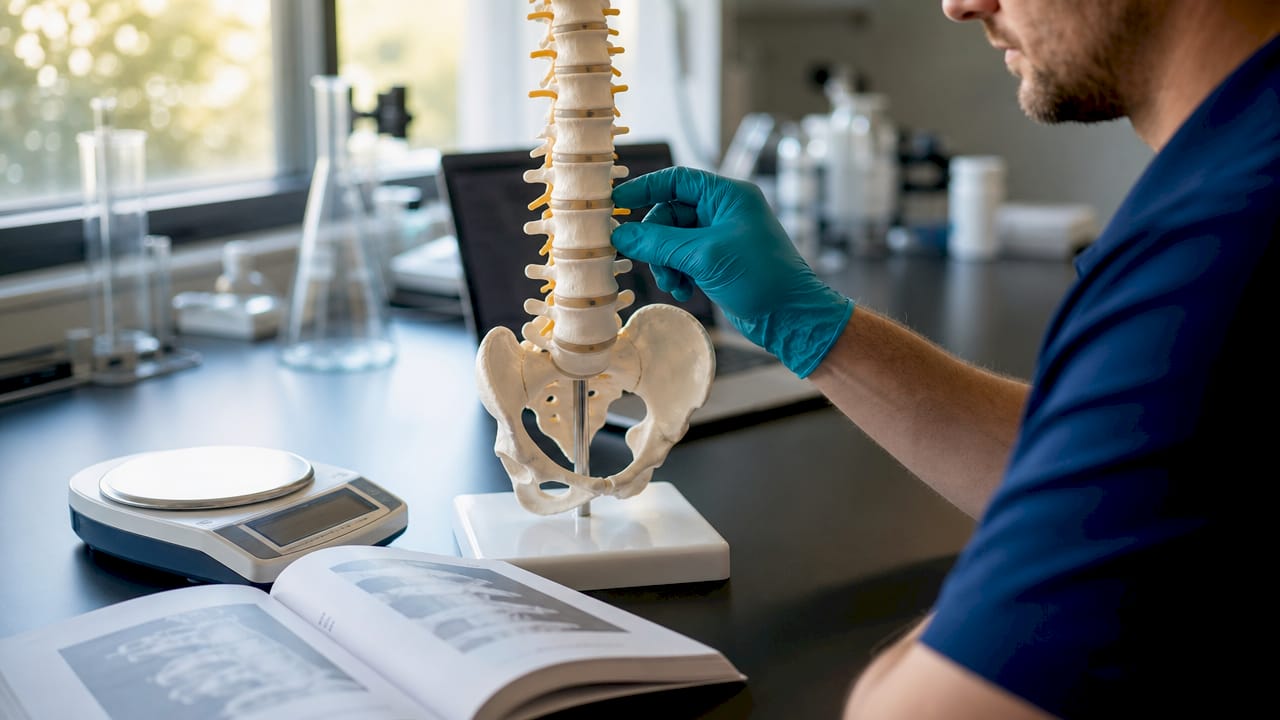
The first thing an adjustment does is mechanical. A restricted spinal joint, called a subluxation or fixation in clinical language, loses its normal gliding motion. Surrounding soft tissue tightens, joint fluid circulation drops, and the segment becomes a source of abnormal sensory input to the nervous system. HVLA thrust manipulation addresses this directly by applying a rapid, controlled force that moves the joint past its passive range of motion and into the paraphysiological space, restoring mobility without exceeding anatomical limits.
Research published in Springer Nature in 2026 confirms that thoracic manipulation acutely decreases the maximum kyphotic angle from 52.2° to 49.3° and reduces vertebral rotation from -1.7° to -1.2° compared to sham treatment. Those numbers represent a real, measurable postural shift occurring within minutes of a single adjustment. The same study notes that these kinematic changes are localized, meaning the adjustment affects the targeted segment rather than producing a global spinal realignment in one session.
Beyond alignment, the thrust breaks down fibrous adhesions that form in chronically restricted joints, restores synovial fluid distribution, and reduces mechanical irritation on adjacent nerve roots. The importance of spinal alignment becomes clear when you consider that even a small positional correction at one segment can reduce the load on surrounding discs and muscles.
Pro Tip: The audible “pop” you sometimes hear during an adjustment is caused by gas cavitation inside the joint capsule. Research confirms no link between hearing a pop and clinical outcomes like pain relief or restored function. A silent adjustment can be just as effective, so do not judge your session by the sound.
| Mechanical effect | What it means for you |
|---|---|
| Kyphotic angle reduction | Immediate postural correction at the adjusted segment |
| Vertebral rotation decrease | Reduced rotational stress on discs and nerve roots |
| Adhesion breakdown | Restored joint gliding and reduced stiffness |
| Synovial fluid redistribution | Better joint lubrication and shock absorption |
| Reduced nerve root irritation | Less local inflammation and referred pain |
How do spinal adjustments influence the nervous system?
The mechanical correction is only half the story. The more powerful explanation for why spinal adjustments restore function lies in what happens to the nervous system during and after the thrust. The joint capsule is packed with mechanoreceptors, sensory cells that detect movement, pressure, and position. When an HVLA thrust fires those receptors, they send a burst of signals up the spinal cord to the brain, and that signal flood has measurable downstream effects.
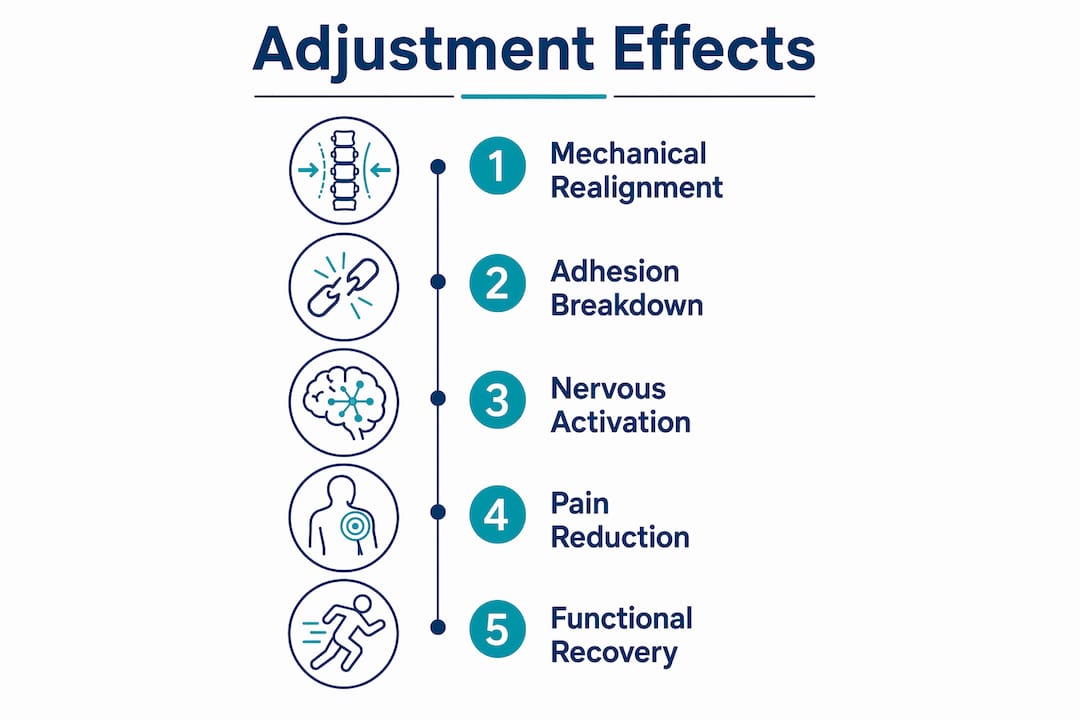
The Gate Control Theory of pain explains one key pathway. High-frequency mechanoreceptor input effectively “closes the gate” on pain signals traveling through the same spinal cord pathways, reducing the perception of pain without any chemical intervention. This is the same principle behind rubbing a bruised elbow and feeling immediate relief. An adjustment triggers a far more organized version of that process across multiple spinal levels.
Four specific neurophysiological effects occur after a well-executed adjustment:
- Reflex muscle relaxation. Hypertonic muscles surrounding a restricted joint receive inhibitory signals following the thrust, reducing protective spasm and restoring normal resting tone.
- Proprioceptive recalibration. The brain’s map of where your spine is in space gets updated with accurate positional data, improving motor control and reducing the risk of re-injury.
- Pain modulation. Descending inhibitory pathways from the brainstem are activated, reducing central sensitization in patients with chronic pain.
- Neuroplastic brain changes. Studies show modulation of prefrontal cortex and default mode network activity after SMT, regions directly associated with chronic pain states and emotional processing.
“Spinal manipulation influences the central nervous system by modulating pain perception and cognitive processing brain regions, supporting a biopsychosocial model rather than a purely mechanical explanation.” — Frontiers in Neurology, 2025
The default mode network finding is particularly significant. This brain network is overactive in people with chronic low back pain and is associated with rumination, heightened pain sensitivity, and reduced functional capacity. SMT appears to quiet that network, which correlates with both reduced pain scores and improved disability ratings. The benefits of spinal adjustments therefore extend well beyond the spine itself into how the brain processes and responds to physical stress.
What does the latest clinical evidence say about effectiveness?
The 2026 Cochrane review on SMT for chronic low back pain provides the clearest summary of where the evidence stands. Compared to sham SMT, function improved by 8.8 points and pain by 7.0 points on a 0 to 100 scale after one month. Compared to no treatment at all, function improved by 12.9 points and pain by 14 points. These are statistically significant results, though the effect sizes are modest, meaning SMT improves functional status and symptom experience rather than producing a complete anatomical correction.
The PACBACK randomized clinical trial published in JAMA adds important nuance. Spinal manipulation alone produced a mean disability difference of only -0.4 compared to standard medical care, which is not statistically significant. However, when manipulation was combined with clinician-supported biopsychosocial self-management, the disability difference reached -1.1, which is significant. Patients in the combined group also achieved 67% with 50% or more disability reduction versus 54% with medical care alone. That gap matters clinically for people trying to return to work or normal activity.
| Study | Comparison | Function outcome | Pain outcome |
|---|---|---|---|
| Cochrane 2026 (SMT vs. sham) | Chronic low back pain | +8.8 points (0-100 scale) | +7.0 points |
| Cochrane 2026 (SMT vs. no treatment) | Chronic low back pain | +12.9 points | +14.0 points |
| PACBACK trial (SMT alone vs. medical care) | Acute/subacute low back pain | -0.4 (not significant) | Not significant |
| PACBACK trial (SMT + self-management vs. medical care) | Acute/subacute low back pain | -1.1 (significant) | Significant |
The consistent message across both sources is that spinal adjustments work best as part of a broader care plan. The effect size on pain reduction versus other treatments is a mean difference of -4.16 and a functional status SMD of -0.22, modest but reproducible. For someone dealing with chronic back pain, even a reliable 8 to 13 point functional improvement on a 100-point scale translates to meaningful gains in daily activity.
How do spinal adjustments differ from other treatments?
Spinal adjustments and physiotherapy both target musculoskeletal function, but they work through different primary mechanisms. Physiotherapy focuses on strengthening, stretching, and movement retraining to build capacity over time. Spinal manipulation delivers an immediate neurophysiological reset that changes how the nervous system processes pain and controls muscle tone, often before any exercise program begins. The two approaches are not competing. They are complementary, and the evidence supports using both.
Comparing the main options for musculoskeletal issues:
- Spinal manipulation. Produces immediate joint mobility gains and nervous system modulation. Best evidence for chronic low back pain and neck pain. Works faster for acute pain relief but requires combination with self-management for lasting disability reduction.
- Physiotherapy and exercise. Builds long-term strength and movement quality. Slower onset but durable results. Clinical guidelines from organizations like the American College of Physicians recommend exercise as a first-line treatment for chronic low back pain.
- NSAIDs and analgesics. Reduce inflammation and pain chemically but do not address joint restriction or nervous system dysregulation. Appropriate for short-term acute management, not for long-term functional restoration.
- Biopsychosocial self-management. Addresses the cognitive and behavioral factors that perpetuate chronic pain. Most effective when paired with manual therapy, as the PACBACK trial confirms.
For a detailed comparison of how chiropractic care vs. physiotherapy stacks up for back pain specifically, the clinical distinctions go deeper than technique alone. The right choice depends on whether your primary problem is joint restriction, muscle weakness, pain sensitization, or a combination of all three.
What practical steps maximize the functional benefits?
Getting the most from spinal adjustments requires more than showing up for appointments. The process starts with finding a qualified practitioner. In Australia and Singapore, registered chiropractors complete a five-year university degree covering spinal assessment, diagnosis, and manual therapy. Dr. Richard at Evertonchiropractic holds Australian registration and brings that clinical training to every assessment.
A well-structured treatment process follows these steps:
- Thorough assessment. Your practitioner identifies the specific segments with restricted mobility, abnormal muscle tone, or altered movement patterns using orthopedic and neurological testing.
- Locating the restrictive barrier. The joint is moved to the end of its passive range before the HVLA thrust is applied. This precision is what separates a therapeutic adjustment from a general mobilization.
- Applying the thrust. A controlled, rapid force moves the joint through the paraphysiological space. The entire maneuver takes less than a second.
- Post-adjustment reassessment. Mobility, muscle tone, and symptom response are checked immediately to confirm the segment has responded.
- Self-management between sessions. Prescribed movement, posture correction, and load management reinforce the neurophysiological changes initiated by the adjustment.
Pro Tip: Posture between sessions matters as much as the adjustment itself. Spending hours in a forward-head position at a desk reverses the proprioceptive gains from treatment. Review office posture habits and make specific changes to your workstation setup to hold your functional gains longer.
Managing expectations is also part of the process. Spinal adjustments and body function improvements are measured in disability scales and activity capacity, not in X-ray changes. The goal is not a perfectly straight spine on imaging. The goal is moving better, hurting less, and doing the things that matter to you.
Key takeaways
Spinal adjustments restore function by combining immediate biomechanical joint correction with a neurophysiological reset that reduces pain, relaxes muscles, and recalibrates how the brain processes movement signals.
| Point | Details |
|---|---|
| Dual mechanism | Adjustments work through both joint realignment and nervous system modulation, not mechanics alone. |
| Clinical evidence | Cochrane 2026 shows function improves by up to 12.9 points versus no treatment on a 100-point scale. |
| Combination therapy wins | PACBACK trial confirms SMT plus self-management outperforms manipulation alone for disability reduction. |
| Pop is irrelevant | Audible cavitation has no correlation with outcomes; silent adjustments are equally effective. |
| Brain changes are real | SMT modulates the prefrontal cortex and default mode network, areas directly linked to chronic pain. |
What I’ve learned after years of watching patients respond to adjustments
The research confirms what I see clinically: the nervous system response is the real driver of functional recovery, not the mechanical correction alone. Patients who get the most out of spinal adjustments are the ones who understand this. They stop chasing the pop, they follow through on self-management, and they treat the adjustment as a reset rather than a fix.
The most common misconception I encounter is that a louder adjustment means a better one. That belief leads patients to judge sessions by sound rather than by how they move afterward. The cavitation research is unambiguous on this point, and educating patients about it changes how they engage with their own recovery.
What surprises most people is how quickly the nervous system responds. Muscle tone changes within seconds of a well-placed thrust. That speed is not placebo. It reflects how densely innervated the spinal joints are and how rapidly the brain integrates new sensory input. The implication is that even one well-executed adjustment can shift a chronic pain pattern, provided the patient reinforces that shift with movement and lifestyle changes.
The future of this field is in understanding exactly which patients respond best and why. Current evidence shows consistent but modest average effects. The clinical reality is that some patients improve dramatically while others see minimal change. Identifying those responders earlier, through better neurological assessment and patient profiling, is where the research needs to go next. Until then, the combination of skilled manual therapy and supported self-management remains the most evidence-grounded approach available.
— Aman
How Evertonchiropractic supports your functional recovery
If you are dealing with back pain, neck pain, or restricted movement that is limiting your daily life, Evertonchiropractic offers evidence-informed spinal care led by Dr. Richard, an experienced Australian chiropractor based in Singapore. Every treatment plan at Evertonchiropractic is built around your specific movement goals and lifestyle, not a generic protocol.
The clinic’s approach combines spinal adjustments with posture correction and self-management guidance, directly reflecting what the clinical evidence shows works best. Whether you are managing neck pain and headaches or working through chronic lower back pain, Evertonchiropractic provides the kind of personalized, long-term care that produces lasting functional gains. You can also explore the lower back pain relief guide for a deeper look at non-medication approaches to spinal health.
FAQ
What does a spinal adjustment actually do to your body?
A spinal adjustment applies a rapid, controlled thrust to a restricted joint, restoring its normal range of motion and triggering a burst of mechanoreceptor activity that modulates pain signals, relaxes surrounding muscles, and recalibrates proprioception. The result is both a mechanical correction and a nervous system reset.
Do spinal adjustments improve health beyond back pain?
Yes. Research shows SMT modulates brain regions including the prefrontal cortex and default mode network, which are linked to pain processing, emotional regulation, and motor control, meaning the benefits of spinal adjustments extend into broader neurological function.
How many adjustments are needed to restore function?
The number varies by condition and individual response. Clinical trials show measurable functional improvements within one month of regular SMT, but lasting disability reduction requires combining adjustments with self-management, as confirmed by the PACBACK trial published in JAMA.
Is spinal manipulation safe?
Spinal manipulation performed by a qualified, registered practitioner is considered safe for most musculoskeletal conditions. Serious adverse events are rare. Your practitioner will screen for contraindications including fracture, severe osteoporosis, and vascular conditions before any treatment.
Why does the pop happen and does it matter?
The pop is caused by gas cavitation inside the joint capsule when pressure drops rapidly during the thrust. Research confirms no correlation between the audible pop and clinical outcomes, so a silent adjustment is not a less effective one.