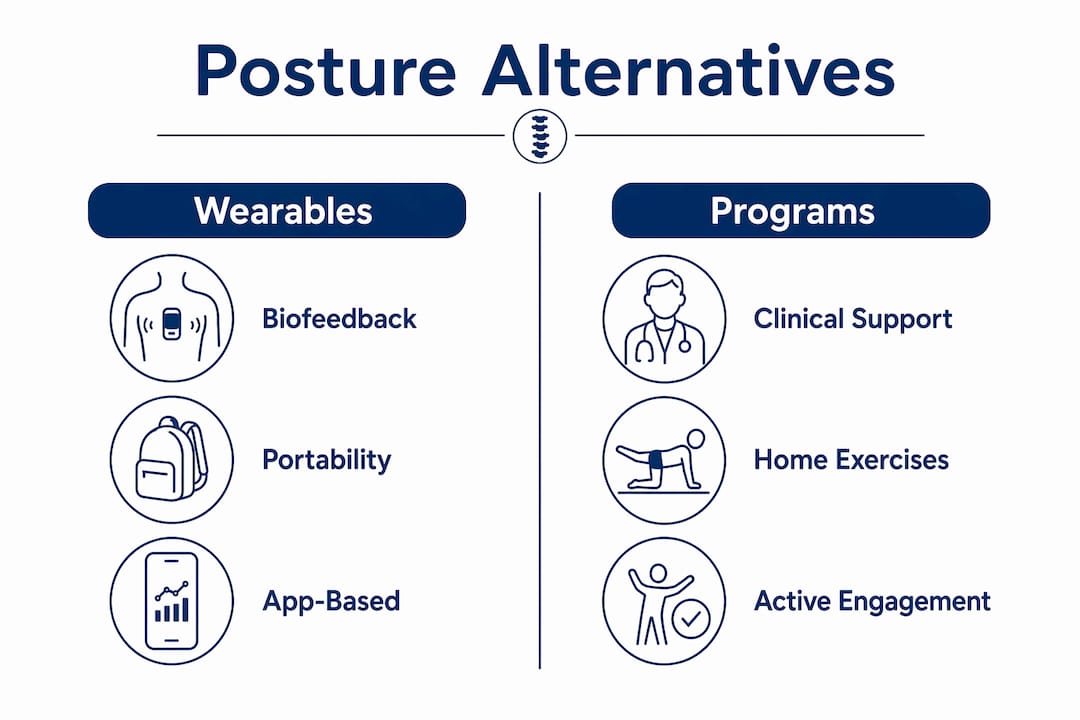
If you’re searching for posturawellness.com alternatives backed by real clinical evidence, the strongest options fall into three categories: wearable biofeedback devices like the Upright GO 2, structured home programs such as the Muscle and Joint Care program, and professional clinical assessments from credentialed providers. Here’s a quick overview of what actually works:
- Upright GO 2: Two precision sensors detect slouching and deliver real-time vibration feedback. Clinically proven to improve posture in 95% of users within 14 days, FDA registered, and CE certified.
- Muscle and Joint Care program: A structured home routine from Baylor Scott & White Health combining daily stretching, strengthening, and ergonomic adjustments to address tech neck and sedentary strain.
- Harvard Medical School guidance: Recommends multi-modal posture management including core-engaged walking, tai chi, aquatic exercise, and workstation ergonomics.
- Professional clinical assessment: Physical therapists and chiropractors identify whether muscle weakness or joint stiffness is driving your posture problems, then build a plan around that specific finding.
What should you look for in a postura wellness option?
Not every posture product deserves your money or your time. A few criteria separate the credible from the marketing-heavy.
- Clinical validation: Prioritize tools backed by peer-reviewed research, not influencer endorsements. Many posture products carry bold claims with limited science behind them.
- Provider credentials: Look for licensed physical therapists, chiropractors, or physicians involved in program design or delivery.
- Technology type: Biofeedback devices that train muscle awareness outperform passive braces, which can cause muscle atrophy by replacing muscular work entirely.
- Accessibility: Telehealth options, flexible scheduling, and app-based coaching matter if you can’t commit to weekly in-person visits.
- Cost and follow-up: A one-time device purchase with a money-back guarantee often delivers better long-term value than recurring subscription fees with no clinical oversight.
Pro Tip: Prioritize options that require active muscle engagement. Passive supports feel helpful short-term but train your muscles to do less, not more.
Home-based posture tools and programs with clinical support
The best home-based posture improvement tools combine technology with behavior change, not just hardware.
Upright GO 2 sits at the top of this category. It weighs under 12 grams, attaches to your upper back, and uses two sensors to detect slouching in real time. When your posture slips, it vibrates gently. The companion app tracks daily progress across nine training programs, and the device syncs 30 days of data automatically. The 95% improvement rate within 14 days comes from independent clinical research, not internal marketing copy. It comes with a 30-day money-back guarantee.
Key stat: 95% of users improved their posture within 14 days using the Upright GO 2, according to peer-reviewed clinical studies. The device is FDA registered and CE certified.
The Muscle and Joint Care program from Baylor Scott & White Health takes a different angle. Rather than a wearable, it prescribes a daily routine: morning stretches, targeted strengthening exercises, and ergonomic adjustments to your workstation. Patients are advised to move every two hours during sedentary work sessions. Pilates and yoga are specifically recommended for lower back and posture-related problems, with chair yoga as a modification for older adults.
Harvard Medical School adds a third layer: core-engaged walking for 20–30 minutes daily, combined with tai chi or aquatic exercise, builds the abdominal and back muscle strength that makes posture improvements stick. Movement breaks every 30–60 minutes reduce spinal load during desk work.
Why professional assessment matters more than any device
A wearable can tell you when you’re slouching. It cannot tell you why.
Harvard Medical School recommends that anyone with posture concerns see a physical therapist trained to evaluate posture, specifically to distinguish muscle weakness from joint stiffness. Those two problems require opposite interventions: one needs strengthening, the other needs stretching. Treating the wrong one wastes months.
“If you rely on your own skills and build healthy posture habits rather than using a posture corrector, you’re likely to have success.” — Dr. Radhika E. Ravula, Baylor Scott & White Health
Dr. Ravula’s point cuts to the core of what separates lasting improvement from temporary relief. Habit formation and natural body awareness through consistent movement outperform long-term reliance on any external device. A professional assessment builds the foundation for those habits by identifying the actual root cause.
Ergonomic factors compound the picture. Chair height, monitor position, and desk setup all affect spinal load passively throughout the day. Addressing those environmental factors alongside active therapy produces better outcomes than either approach alone.
How do the main alternatives compare?
| Option | Strengths | Limitations |
|---|---|---|
| Upright GO 2 | Clinically validated, portable, app-based tracking | Trains awareness, not root-cause correction |
| Muscle and Joint Care program | Free, lifestyle-based, Baylor Scott & White backed | Requires self-discipline and consistency |
| Harvard multi-modal approach | Comprehensive, research-grounded | No single product; requires combining methods |
| Professional clinical assessment | Personalized, targets root cause | Higher upfront cost, requires appointments |
The Upright GO 2 fits patients who want a measurable, tech-driven starting point. The Muscle and Joint Care program suits those who prefer a structured routine without devices. Professional assessment is the right call when pain is persistent or posture problems have a clear structural component. None of these options are mutually exclusive.
What patients say about posture and pain management alternatives
Patient feedback on posture wellness options consistently points to one pattern: tools that require active participation get better long-term results than passive supports. Patients who combined the Upright GO 2 with daily movement breaks reported faster habit formation than those who used the device alone. People who followed the Baylor Scott & White stretching and strengthening protocol noted reduced neck tension within a few weeks, particularly when they paired it with ergonomic workstation changes.

The common thread in negative reviews across passive braces and generic correctors is dependency. Patients report feeling worse when they stop using the device, which aligns directly with the muscle atrophy risk that Harvard Medical School flags for passive supports.
Evertonchiropractic offers a different path to posture health
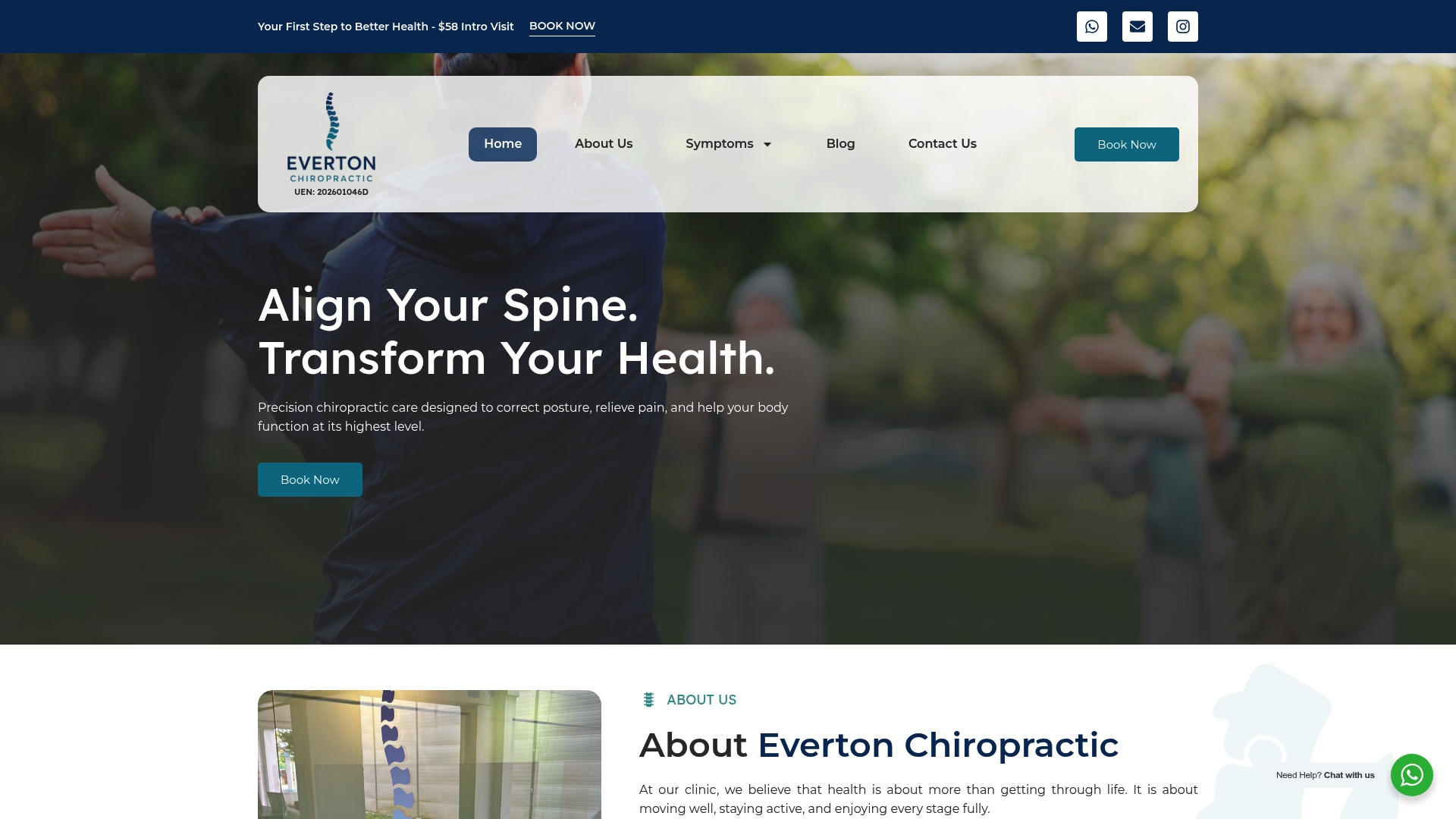
If the options above feel like pieces of a puzzle you’re still assembling, Evertonchiropractic offers something more direct. Led by Dr. Richard, an experienced Australian chiropractor, the clinic builds personalized treatment plans around each patient’s specific movement patterns, lifestyle, and goals. That means spinal adjustments, active rehabilitation, and injury prevention strategies working together, not a generic program handed to everyone who walks in.
The clinic’s approach challenges the idea that posture decline is inevitable with age. Dr. Richard’s focus on long-term movement quality means patients leave with a strategy, not just short-term relief. For patients dealing with nerve pain or chronic back issues, Evertonchiropractic targets the underlying cause rather than managing symptoms.
Key Takeaways
Evidence-based posturawellness.com alternatives combine wearable biofeedback technology, structured home programs, and professional clinical assessment to address posture and pain at the root cause.
| Point | Details |
|---|---|
| Upright GO 2 effectiveness | Clinically proven to improve posture in 95% of users within 14 days; FDA registered and CE certified. |
| Passive devices carry risk | Harvard Medical School warns passive braces can cause muscle atrophy by replacing muscular engagement. |
| Professional assessment first | Distinguishing muscle weakness from joint stiffness determines whether you need stretching or strengthening. |
| Movement breaks are non-optional | Baylor Scott & White advises moving at least every two hours during sedentary work sessions. |
| Evertonchiropractic’s approach | Dr. Richard builds personalized plans targeting root causes, not just posture symptoms. |
FAQ
What are the best posturawellness.com alternatives in 2026?
The strongest alternatives include the Upright GO 2 wearable biofeedback trainer, the Muscle and Joint Care program from Baylor Scott & White Health, and professional chiropractic or physical therapy assessments that build personalized treatment plans.
Do posture corrector devices actually work?
Wearable biofeedback devices like the Upright GO 2 are clinically validated and work well as training tools. Passive braces, however, can cause muscle atrophy with extended use and are best treated as short-term reminders, not long-term solutions.
How often should I take movement breaks for posture health?
Baylor Scott & White Health recommends getting up and moving at least every two hours during sedentary work or study sessions, with Harvard Medical School suggesting movement breaks every 30–60 minutes for optimal spinal health.
When should I see a professional instead of using a home program?
See a chiropractor or physical therapist when pain is persistent, worsening, or has a clear structural component. A professional assessment identifies whether muscle weakness or joint stiffness is driving the problem, which determines the correct intervention.
Can Evertonchiropractic help with posture and pain management?
Yes. Evertonchiropractic, led by Dr. Richard, provides evidence-informed, personalized treatment plans covering spinal adjustments, active rehabilitation, and long-term movement health for patients dealing with posture problems, back pain, and related conditions.