Targeted corrective exercise programs that train hip strength, ankle mobility, and motor control can reduce dynamic knee valgus and improve knee tracking. This isn’t a maybe. A structured 6-week program measured real reductions in valgus angle alongside increased isometric strength in hip and knee stabilizers, with sessions running 40 to 45 minutes, four to five times a week. That’s the evidence floor you’re working from.
What doesn’t work is picking three glute exercises off a fitness app and hoping for the best. The programs that produced measurable change combined hip strengthening with ankle mobility and motor control drills, not one isolated muscle group. If your knees cave inward during squats, lunges, or landing from a jump, the fix starts with an honest look at three systems: your hip, your ankle, and how well your brain coordinates the two under load.
Key Takeaways
Dynamic knee valgus responds to structured exercise combining hip strength, ankle mobility, and motor control training over a 6 to 8 week progressive program.
| Point | Details |
|---|---|
| Exercise works for dynamic valgus | Comprehensive 6 to 8 week programs targeting hip, ankle, and motor control produce measurable reductions in valgus angle. |
| Comprehensive beats isolated | Programs combining multiple muscle groups outperform narrow, single-muscle routines in clinical trials. |
| Self-screen with single-leg squats | The single-leg squat reveals compensation patterns that double-leg squats can hide. |
| Fixed deformity has limits | Exercise improves control and symptoms but won’t reshape a structurally fixed genu valgum in adults. |
| Ankle mobility is often overlooked | Restricted dorsiflexion forces knee compensation, so ankle drills belong in every program, not just hip work. |
Table of Contents
- What Is Knee Valgus, and Is It the Same as Knock Knees?
- What Causes Dynamic Knee Valgus?
- How Do You Check for Knee Valgus at Home?
- Which Exercises Fix Knee Valgus?
- How Long Does It Take to Correct Knee Valgus?
- When Should You See a Professional Instead of Self-Treating?
- How Everton Chiropractic Approaches Knee Valgus
- Ready for a Movement Assessment That Targets the Real Cause?
- What the Research Actually Tells You to Prioritize
- Sources
- FAQ
What Is Knee Valgus, and Is It the Same as Knock Knees?
Knee valgus describes the knee drifting inward toward the midline, usually visible when your knee caves past your big toe during a squat, step-down, or landing. There are two very different versions of this, and confusing them leads to the wrong fix.
Fixed genu valgum is a structural bony alignment, the classic “knock knees” look that’s visible even when you’re standing still and not moving. Dynamic knee valgus (DKV) only shows up during movement, when the knee collapses inward as you squat, jump, or cut. Genu valgum is largely a skeletal story. Dynamic knee valgus is a control problem, and control problems respond to training.
The distinction matters for injury risk. Dynamic valgus during landing and cutting is one of the movement patterns researchers associate with ACL strain and patellofemoral pain, because it loads the knee joint asymmetrically. If your knees only cave during activity, exercise is squarely in your toolkit.
What Causes Dynamic Knee Valgus?
Most cases trace back to one or more of three breakdowns, and figuring out which applies to you determines which knock knee exercises for adults will actually move the needle.
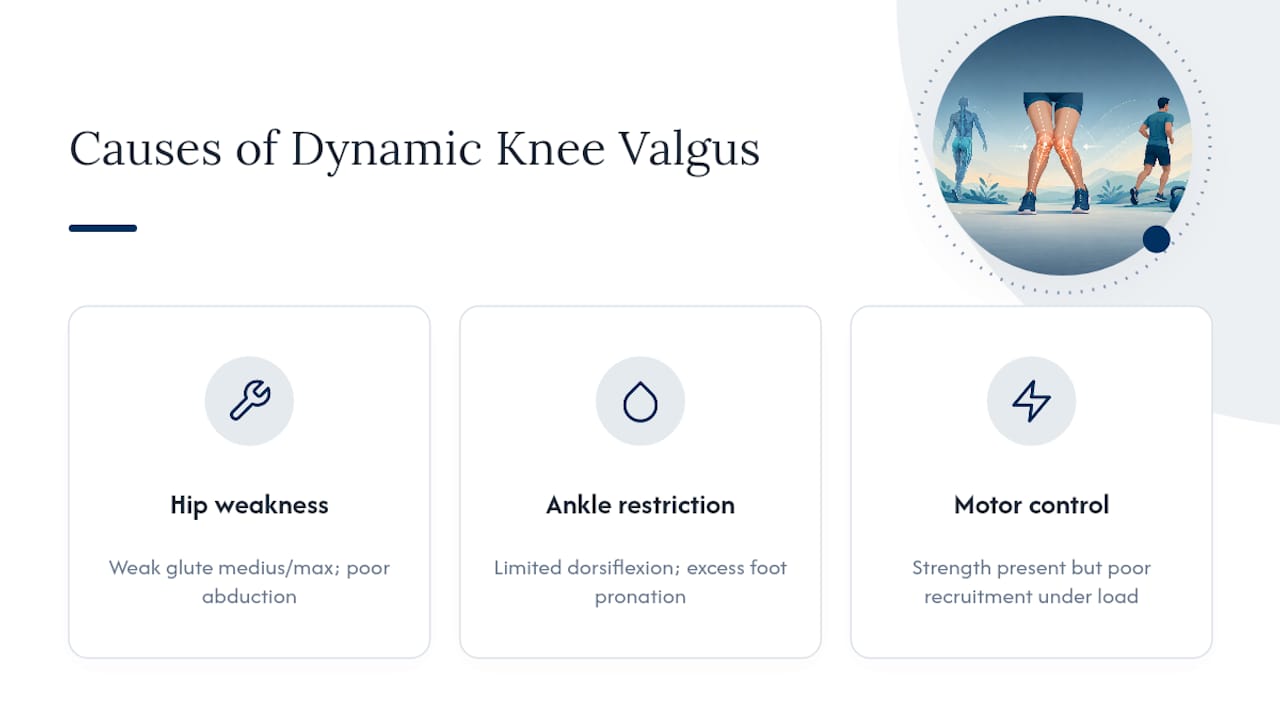
Hip weakness is the most common culprit. When the gluteus medius and gluteus maximus don’t fire strongly or quickly enough, the thigh rotates inward and drags the knee with it. This shows up as weak hip abduction and poor external rotation control, particularly on a single leg.
Ankle restriction is the quieter cause. Limited ankle dorsiflexion, often paired with excessive foot pronation and an underactive tibialis posterior, forces the knee to compensate by drifting inward to keep your heel on the ground during a squat. A 2013 exercise intervention study found that improving ankle dorsiflexion directly reduced both 2D and 3D valgus measures during squatting.
Motor control deficits mean the muscles are strong enough on a table but the brain hasn’t learned to recruit them correctly under load. Add in quad-dominant movement habits, tight lateral hip and IT band tissue, or old alignment issues from a prior injury, and you’ve got a full picture of why knees collapse.
How Do You Check for Knee Valgus at Home?
You don’t need a lab to get useful information. Prop a phone against a wall or ask someone to film you from the front doing these two tests.
- Double-leg squat. Stand with feet shoulder-width apart, squat to about 90 degrees, and watch (or review the video) for either knee traveling inward past the line of your second toe.
- Single-leg squat. Balance on one leg and squat to a comfortable depth. This is the more revealing test, since standing on two legs lets a strong side compensate for a weak one.
- Mirror or slow-motion review. Watch the knee’s path relative to your foot at the bottom of the movement, not just the top, since collapse often happens deepest in the range.
A genuine positive screen is the knee visibly drifting past the toe line, often paired with the hip dropping or the trunk leaning to one side. Occasional minor wobble isn’t automatically dysfunction. Self-screening also has real limits: it can’t tell you whether the cause is hip, ankle, or control related, and it can’t rule out a structural issue. If the collapse is obvious and repeatable, that’s your cue to start the exercises below, and a professional movement assessment can pinpoint exactly which system is failing if progress stalls.
Which Exercises Fix Knee Valgus?
Programs that actually changed valgus angles in trials didn’t rely on one exercise. An 8-week comprehensive program that combined hip strengthening with broader kinematic training produced significant improvements in hip abductor and external rotator strength, along with measurable changes in knee, femur, and tibial rotation. Comprehensive beats isolated, every time the two have been compared.
Activation exercises (start here, every session):
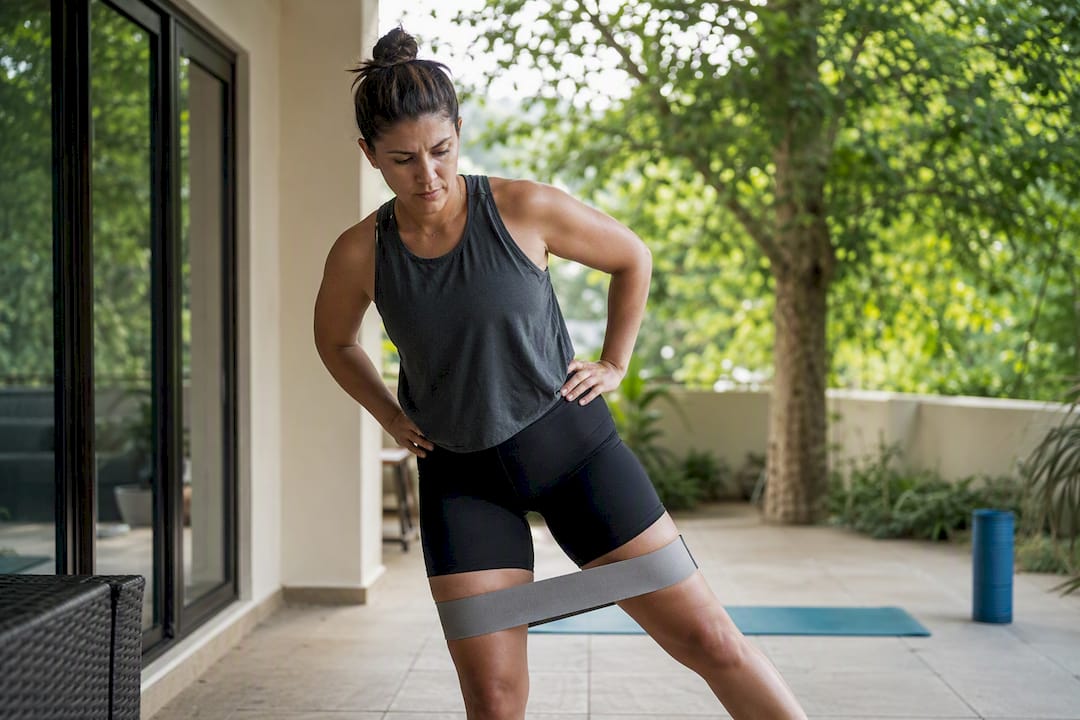
- Clamshells, 15 to 20 reps per side, targeting the gluteus medius with a resistance band above the knees
- Side-lying hip abduction, same rep range, focusing on a slow controlled lift without rocking the pelvis backward
- Glute bridges, 15 to 20 reps, driving through the heels with the knees tracking straight over the toes
Band progressions (build on activation once form is solid):
- X-band walks for lateral hip strength under tension
- Monster walks for continuous glute medius and maximus engagement through a walking pattern
- Seated band abduction as a lower-intensity option for early-stage rehab or warm-ups
Functional and loaded strength (where control meets real load):
- Step-ups, 10 to 15 reps per leg, cueing the knee to stay stacked over the second toe throughout
- Split squats, building single-leg strength with less balance demand than a full single-leg squat
- Single-leg Romanian deadlifts, with the emphasis on hip hinge mechanics and knee alignment rather than depth
Motor control drills (the piece most home programs skip):
- Single-leg balance holds, 30 to 60 seconds, building the unconscious control that keeps the knee tracking correctly
- Assisted single-leg squats with a mirror, wall, or coaching cue providing real-time feedback
- Reactive neuromuscular training using a light band looped around the knee to gently pull it into valgus, teaching the muscles to resist the pull
Ankle work (the piece that’s easiest to overlook):
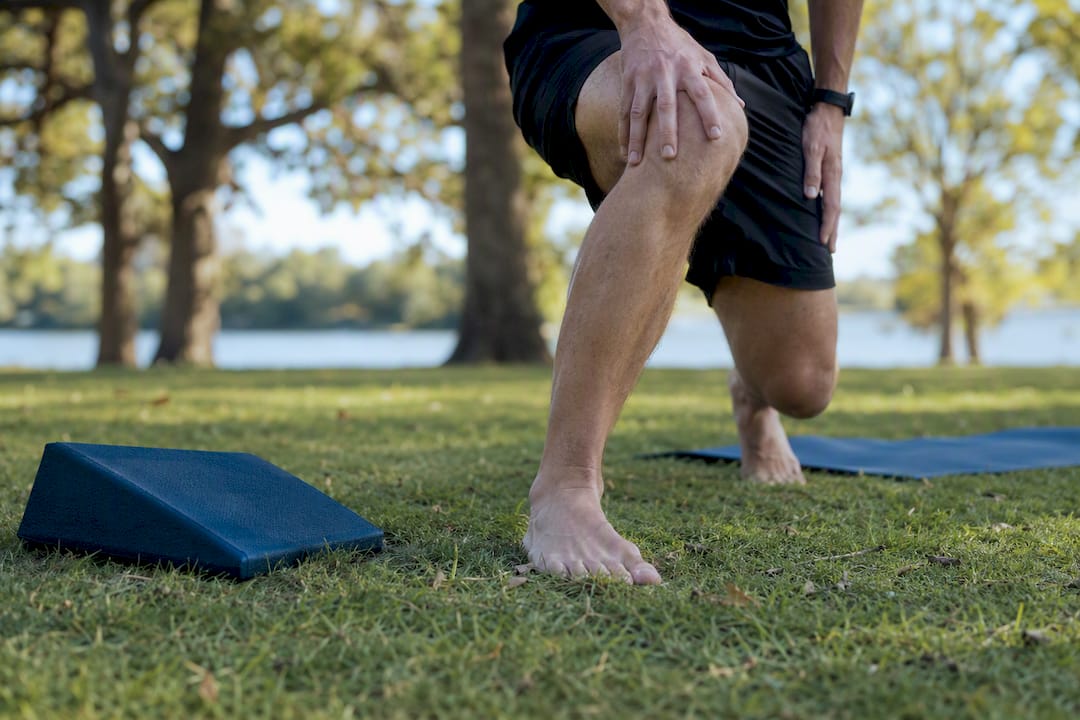
- Weight-bearing ankle dorsiflexion mobilizations, kneeling lunge position, driving the knee over the toes while keeping the heel down
- Tibialis posterior activation drills, such as slow controlled heel raises with attention to arch control
Pro Tip: If your knee only collapses on the single-leg squat and not the double-leg version, your problem is almost certainly hip or motor control, not ankle mobility. Test both before you build your program so you’re not wasting weeks on the wrong drill.
Cueing matters as much as exercise selection. Never force a painful range to “fix” alignment, and watch for trunk lean or hip dropping as compensation patterns. Both undermine the exercise’s purpose. A balance training guide for safe progressions covers similar principles for building stability without overloading a joint before it’s ready.
How Long Does It Take to Correct Knee Valgus?
Trials that produced measurable change ran six to eight weeks, and that window shows up consistently enough to treat it as a realistic target rather than a marketing number.
- Weeks 1 to 2: Activation focus. Clamshells, bridges, and side-lying abduction, three to five sessions a week, building the mind-muscle connection before adding load.
- Weeks 3 to 5: Add band progressions and functional strength work. Step-ups, split squats, and X-band walks, two to three sets of 10 to 15 reps, three sessions weekly.
- Weeks 6 to 8: Integrate motor control and sport-specific drills. Single-leg balance, RNT with a band, and controlled single-leg squats under supervision or video feedback.
Each session should flow in the same order: activation first, strength work second, motor control integration third, and mobility work as needed at the end. A 10-session hip-and-ankle intervention that ran over two to three weeks produced measurable reductions in medial knee displacement, showing that even shorter, tightly focused blocks can move the needle when both hip and ankle work are included.
Track progress with the same video setup from your self-assessment. Improved single-leg squat control and less visible collapse are your two clearest signals, alongside reduced pain during the activities that used to bother you.
Pro Tip: Resist the urge to rush to loaded, single-leg work in week one. A study of a 6-week program focused narrowly on a few muscles found it didn’t reliably change valgus angles in young athletes. Comprehensive and progressive beats fast and narrow.
When Should You See a Professional Instead of Self-Treating?
Stop and get assessed if you notice sharp pain, swelling, a locking or catching sensation, or a feeling of the knee giving way. Those are mechanical red flags, not signs to push through with more reps.
Exercise has real limits here. It can meaningfully improve movement control and reduce symptoms, but it will not change a fixed bony deformity in an adult. If your knees look knocked even standing still, that’s genu valgum, and exercise supports function rather than reshaping the skeleton, a point echoed in medical overviews of genu valgum management.
See a clinician if symptoms persist past a structured 6 to 8 week program, if you feel instability during daily activities, or if you’ve made no progress despite consistent effort. A thorough assessment typically checks ankle range of motion, hip strength, and often 2D or 3D movement analysis, the same tools used in the clinical trials behind this article. Conservative care, including proper hip and knee alignment work, is usually the first step before anything more invasive gets discussed.
How Everton Chiropractic Approaches Knee Valgus
Dr. Richard built Everton Chiropractic’s approach around one idea: exercise alone often misses what’s actually driving the collapse. An assessment combines strength testing, ankle mobility checks, and movement analysis to figure out whether your case is hip-dominant, ankle-restricted, or a control issue, then builds a plan around that specific finding rather than a generic template.
That’s the gap most home programs can’t close. Clinic-based postural correction treatment adds hands-on feedback and objective tracking to the same exercise principles covered here, tailored to your alignment, your sport, and your timeline.
Ready for a Movement Assessment That Targets the Real Cause?
Home exercises get you most of the way, but a functional movement assessment tells you exactly which of the three systems, hip, ankle, or motor control, is driving your specific collapse pattern. Guessing wastes weeks; testing doesn’t.
Everton Chiropractic builds personalized treatment plans around what your body actually needs instead of a one-size-fits-all routine, whether that’s hip activation work, ankle mobility, or a structured strength progression layered on top of what you’re already doing at home. If your knees have been caving inward for months with no real change, book an assessment and get a plan built around your own movement pattern.
What the Research Actually Tells You to Prioritize
The conventional advice on knee valgus is stuck in 2015: do some clamshells, add a few band walks, call it fixed. That advice isn’t wrong so much as incomplete. The trials that produced real, measured change all shared one trait: they treated the hip, the ankle, and the nervous system as one connected problem, not three separate boxes to check.
If I had to pick the single most underrated piece of this puzzle, it’s motor control. Plenty of people with knee valgus already have adequate hip strength on a testing table. Their glutes just don’t fire in the right sequence under load, which is a coordination problem no amount of clamshells alone will solve. That’s why reactive neuromuscular training and feedback-based drills belong in a program even when strength numbers look fine.
Prioritize the self-assessment first. Know whether your collapse is hip-dominant, ankle-restricted, or control-based before you build a routine, because a generic program wastes weeks that a targeted one wouldn’t.
— Aman
This article is general information, not a substitute for advice from a qualified doctor. Consult a qualified healthcare professional about your own circumstances before acting on anything here.
Sources
- Clinical study reporting reductions in knee valgus after a 6-week corrective program (PubMed entry)
- Two- and 3-Dimensional Knee Valgus Are Reduced After an Exercise Intervention in Young Adults With Demonstrable Valgus During Squatting – PMC
- The effectiveness of the comprehensive corrective exercise program on kinematics and strength of lower extremities in males with dynamic knee valgus – BMC Musculoskeletal Disorders (Springer)
FAQ
Can Knee Valgus Be Corrected With Exercise?
Dynamic knee valgus, the movement-related collapse, can be meaningfully reduced through structured programs combining hip, ankle, and motor control training over 6 to 8 weeks. Fixed bony genu valgum won’t be structurally corrected by exercise, though function and symptoms still improve.
What Muscles Are Weak With Knee Valgus?
The gluteus medius and gluteus maximus are the most commonly weak or underactive muscles, since they control hip abduction and external rotation that keep the knee tracking properly. The tibialis posterior and vastus medialis are also frequently involved, affecting foot arch control and knee tracking respectively.
Can a Valgus Knee Be Corrected?
Dynamic valgus responds well to targeted exercise, with clinical trials showing measurable reductions in valgus angle after structured programs. A fixed structural deformity requires a different conversation, often involving orthotics or, in select cases, surgical evaluation.
What Is the Fastest Way to Fix Knock Knees?
There’s no shortcut faster than a comprehensive program addressing hip strength, ankle mobility, and motor control together, since trials show narrow, single-focus routines often fail to change valgus angles reliably. Consistency across 6 to 8 weeks, not a single fast fix, is what the evidence supports.
Recommended
- Avoiding Knee Surgery: How Proper Hip and Knee Alignment Eases Joint Stress – Everton Chiropractic
- 29 The Biomechanics of Walking How Poor Foot Mechanics Create Knee Pain Target Walking Knee Pain – Everton Chiropractic
- Can Poor Posture Cause Knee Pain? Yes, Sometimes – Everton Chiropractic
- Reduce Fall Risk Through Alignment: Exercises for Stability – Everton Chiropractic