
Chiropractic care is defined as a health practice that corrects spinal and joint alignment to improve nervous system communication and physical function. For fitness enthusiasts, that definition carries real weight. When your spine is misaligned, nerve signals slow down, muscles fire inefficiently, and your body compensates with movement patterns that lead to injury. Chiropractic care explained for fitness goes beyond back pain relief. It covers performance enhancement, injury prevention, and faster recovery, all grounded in evidence that has grown significantly through 2026 protocols and clinical research.
How does chiropractic care improve athletic performance?
Spinal adjustments improve athletic performance by optimizing nervous system signaling between the brain and muscles. When vertebrae are misaligned, they create interference in that signal pathway. The result is slower reaction time, reduced coordination, and weaker muscle contractions, even in athletes who train consistently.
Clinical studies link chiropractic adjustments to increased cortical drive, which is the brain’s ability to activate muscle fibers fully. That means more strength from the same training volume. Proprioception, your body’s sense of joint position in space, also improves after spinal manipulation. Better proprioception translates directly to sharper coordination and faster agility on the field or in the gym.
Sports chiropractic goes further than the spine alone. Kinetic chain assessment evaluates compensatory movement patterns from the feet through the cervical spine. A tight hip flexor, for example, can alter lumbar mechanics and eventually cause shoulder dysfunction. Addressing the full chain prevents those cascading breakdowns before they become injuries.

Advanced clinics now combine targeted laser therapy with spinal adjustments. Laser therapy paired with adjustments improves neurological processing speed, reaction time, and muscle contraction strength. Think of it as recalibrating the nervous system’s software while the adjustment corrects the hardware.
Key performance benefits of chiropractic care for active individuals include:
- Improved proprioception for sharper balance and coordination
- Increased cortical drive leading to greater muscle activation
- Faster reaction time through enhanced nerve conduction
- Better range of motion at key joints including hips, shoulders, and thoracic spine
- Reduced compensatory patterns that drain energy and increase injury risk
Pro Tip: Ask your chiropractor specifically about neurorecalibration techniques. Pain relief is a side effect of good chiropractic care. The primary goal is restoring the nervous system’s ability to communicate clearly with every muscle in your body.
What protocols do chiropractors use for fitness enthusiasts?
Evidence-based chiropractic care for active individuals follows a structured intake process. The first visit includes a comprehensive physical evaluation, functional movement screening, and a joint-by-joint assessment. This is not a generic intake form. It maps how your body actually moves under load, identifying restrictions and asymmetries that standard pain assessments miss.
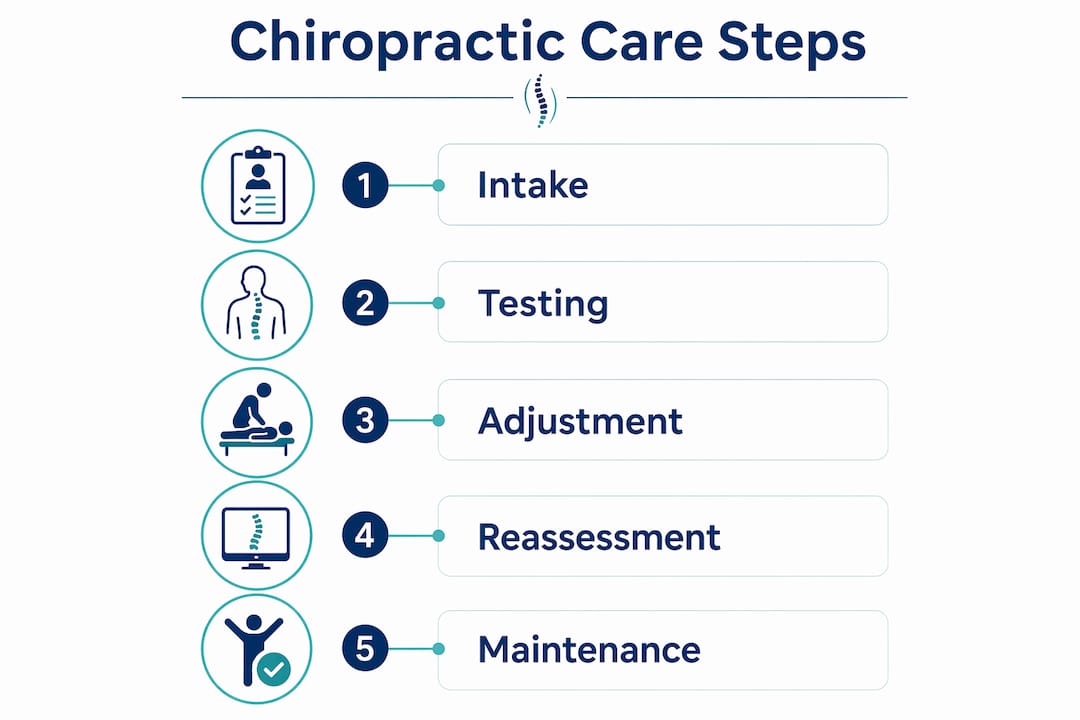
Orthopedic and neurological testing adds another layer of precision. These tests identify nerve root involvement, joint instability, and soft tissue pathology that influence how you move and recover. A chiropractor working with fitness enthusiasts uses these findings to build a treatment plan tied to your specific training demands, not just your symptoms.
Progress tracking separates good chiropractic care from average care. Reassessment every 4–6 visits using objective functional movement scores keeps treatment calibrated to real outcomes. Subjective pain reports alone are unreliable guides. A runner might report less pain but still show a 30% deficit in hip extension, which predicts a future hamstring strain.
The table below shows how evidence-based chiropractic protocols differ from a standard clinical approach:
| Assessment area | Standard clinical approach | Sports chiropractic protocol |
|---|---|---|
| Intake evaluation | Pain location and history | Functional movement screening and joint-by-joint assessment |
| Progress tracking | Patient-reported pain scores | Objective functional movement scores every 4–6 visits |
| Treatment scope | Isolated pain site | Full kinetic chain from feet to cervical spine |
| Technique options | Spinal manipulation only | Manipulation, mobilization, dry needling, laser therapy |
Non-manipulative options matter too. Mobilization uses gentle, repetitive joint movement instead of high-velocity thrusts. Dry needling and mobilization are applied when tissue sensitivity or acute injury makes standard adjustments inappropriate. These alternatives keep treatment progressing even during flare-ups.
How does chiropractic care prevent injuries and speed up recovery?
Injury prevention is where chiropractic care delivers its most underappreciated value for fitness enthusiasts. Most overuse injuries, including tendinopathies, IT band syndrome, and lower back strain, develop from biomechanical imbalances that accumulate over months of training. Correcting biomechanical imbalances proactively reduces the mechanical stress that causes those injuries in the first place.
Regular adjustments improve joint mobility and muscle flexibility. Both factors directly lower injury incidence during high-volume training blocks. A joint that moves through its full range under load distributes force evenly. A restricted joint concentrates force at one point, and that point eventually fails.
Recovery acceleration is equally well supported. Chiropractic care enhances blood flow, reduces inflammation, and supports soft tissue healing. These mechanisms shorten the time between hard training sessions. Faster recovery means more consistent training, and training consistency is the single greatest predictor of long-term fitness progress.
A 52-week study on spinal manipulative therapy showed meaningful improvements in sleep quality alongside pain reduction. Sleep is where the body repairs muscle tissue and consolidates motor patterns. Better sleep quality from regular chiropractic care compounds the recovery benefits well beyond what happens on the treatment table.
Benefits of chiropractic care for injury prevention and recovery include:
- Reduced lower back pain and musculoskeletal strain during heavy training
- Improved joint mechanics that distribute load evenly across tissues
- Enhanced soft tissue healing through better circulation and reduced inflammation
- Better sleep quality supporting muscle repair and nervous system recovery
- Greater training consistency by reducing the frequency and severity of setbacks
Pro Tip: Schedule a chiropractic assessment at the start of a new training cycle, not after you get hurt. Identifying movement restrictions before you increase load is far more effective than treating the injury those restrictions eventually cause.
You can also prevent sports injuries more effectively when chiropractic care is built into your training plan from the beginning rather than used as a last resort.
How do you integrate chiropractic care into your fitness routine?
Timing adjustments relative to your workouts matters. Schedule chiropractic sessions on lighter training days or rest days when possible. After a heavy squat session, your joints and soft tissues are under acute stress. An adjustment on that day can be productive, but your chiropractor needs to know your training load to calibrate the session appropriately.
Coordination between your chiropractor, coach, and other healthcare providers produces the best outcomes. Interdisciplinary, evidence-informed care consistently outperforms isolated treatment. Share your training schedule, recent performance data, and any movement restrictions with your chiropractor. That information changes how they treat you.
Corrective exercises prescribed by your chiropractor bridge the gap between sessions. These are not generic stretches. They target the specific restrictions identified in your functional movement screen and reinforce the joint mechanics corrected during your adjustment. Doing them consistently accelerates progress and extends the benefit of each visit.
Common misconceptions about chiropractic adjustments are worth addressing directly. The popping sound during an adjustment is a release of gas pressure in the joint capsule. It is not bones cracking, and it does not indicate structural damage. Adjustments are safe for active adults when performed by a qualified chiropractor following a proper assessment. The sound during adjustment is simply a pressure release, nothing more.
Maintenance care differs from acute care. Once your movement quality improves and your primary complaints resolve, monthly or bimonthly visits maintain the gains and catch new restrictions before they become problems. Active individuals who train hard benefit from treating chiropractic care as a regular part of their health routine, not a reactive measure. For a structured approach, the 2026 active lifestyle checklist from Evertonchiropractic outlines exactly how to build chiropractic into your training year.
Key Takeaways
Chiropractic care improves fitness performance, prevents injury, and accelerates recovery by correcting spinal alignment and restoring nervous system function across the full kinetic chain.
| Point | Details |
|---|---|
| Nervous system optimization | Spinal adjustments improve nerve signaling, increasing muscle activation and reaction time. |
| Kinetic chain assessment | Chiropractors evaluate the full body from feet to cervical spine, not just the pain site. |
| Objective progress tracking | Reassessment every 4–6 visits using functional movement scores keeps treatment on track. |
| Injury prevention over pain relief | Correcting biomechanical imbalances before injuries develop is the highest-value application. |
| Integration with training | Scheduling adjustments on lighter days and pairing them with corrective exercises maximizes results. |
What I’ve learned after watching athletes ignore their spine
Most fitness enthusiasts I’ve worked with arrive at chiropractic care after an injury forces them to stop training. That’s the wrong entry point. The athletes who get the most out of chiropractic care are the ones who treat it like strength training: consistent, progressive, and built into the plan before something breaks down.
The nervous system focus surprises people. They expect to feel better in their back. They don’t expect to lift more, move faster, or recover between sessions more quickly. But that’s what happens when the nervous system communicates without interference. The JAMA review confirming spinal manipulation improves pain and function in acute low back pain cases is well known. What gets less attention is the downstream effect on performance metrics that have nothing to do with pain.
Patient education is the variable that separates good outcomes from great ones. When you understand why your chiropractor is assessing your hip mobility during a lower back complaint, you follow through on the corrective exercises. You schedule the follow-up. You tell your coach what restrictions were found. That compliance compounds over a training season into a measurable performance edge.
The evidence also supports an interdisciplinary model. Chiropractic care works best alongside strength training, adequate sleep, and sound nutrition, not as a standalone fix. Evertonchiropractic’s approach under Dr. Richard reflects exactly that philosophy: evidence-informed, personalized, and focused on long-term function rather than short-term symptom management.
— Aman
Evertonchiropractic’s approach to fitness-focused care
Evertonchiropractic, led by Dr. Richard, builds treatment plans around your training goals, not just your pain level. Every plan starts with a functional movement assessment and includes spinal adjustments, soft tissue therapies, and corrective exercises calibrated to your specific activity demands.

Active individuals benefit from spinal adjustments backed by evidence that address both immediate discomfort and the underlying movement restrictions driving it. Whether you are managing a recurring lower back issue or preparing for a competitive season, Evertonchiropractic provides the assessment and ongoing care to keep you training consistently. You can also explore spinal mobility improvement strategies that complement your chiropractic plan and support long-term performance.
FAQ
What is chiropractic care and how does it help fitness?
Chiropractic care corrects spinal and joint alignment to improve nervous system function, which enhances muscle activation, coordination, and recovery. For fitness enthusiasts, this translates to better performance and fewer injuries.
How often should active individuals see a chiropractor?
During a new training cycle or after identifying movement restrictions, visits every 2–4 weeks are typical. Once movement quality stabilizes, monthly maintenance visits sustain the gains.
Does chiropractic care actually improve athletic performance?
Clinical studies link spinal manipulation to increased cortical drive, improved proprioception, and faster reaction time, all of which directly support athletic performance beyond pain relief.
Is the popping sound during an adjustment harmful?
The sound is a release of gas pressure in the joint capsule, not bones cracking. It carries no structural risk and is a normal part of a spinal adjustment.
Can chiropractic care replace other injury treatments?
Chiropractic care works best as part of an interdisciplinary plan that includes strength training, physical therapy when needed, and lifestyle modifications. It complements other treatments rather than replacing them.