
Spinal stress from sports is not just a nuisance. Left unmanaged, it can sideline you for months or permanently alter how you move. The good news: most sports-related spinal injuries respond well when caught early and treated with the right protocol.
To address sports-related spinal stress effectively, you need to act on three fronts:
- Recognize early warning signs before a minor stress reaction becomes a full fracture or herniation
- Modify training loads by incorporating low-load days and progressive volume increases
- Pursue evidence-informed treatment including targeted physical therapy, core stabilization, and, when needed, temporary bracing
- Strengthen the right muscles — particularly the deep spinal stabilizers and abdominals — to reduce mechanical load on vertebral structures
- Fuel your spine with adequate calcium, vitamin D, and hydration to support bone resilience
- Use protective equipment and sport-specific technique coaching to reduce repetitive stress patterns
Table of Contents
- What common spinal injuries do athletes actually face?
- How can you actually prevent spinal injuries from sport?
- What does evidence-informed treatment look like for spinal injuries?
- When should you stop playing and get medical help?
- How Evertonchiropractic approaches spinal stress in athletes
- What happens when spinal stress goes untreated?
- Evertonchiropractic: spinal care built around your athletic goals
- FAQ
- Key Takeaways
What common spinal injuries do athletes actually face?
Athletes encounter a narrower set of spinal injuries than most people assume, but those injuries tend to be stubborn and easy to misread as generic back pain.
Lumbar spondylolysis (a stress fracture of the pars interarticularis) is the most common cause of back pain in young athletes. Sports involving repetitive spinal extension and rotation — gymnastics, football, cricket fast bowling — carry up to three times the risk seen in the general population, with adolescent growth spurts amplifying that risk further.
Disc herniations typically follow repeated flexion-compression loads, common in weightlifting and rowing. Pain often radiates into the leg, which distinguishes it from bone stress injuries. Stingers are transient brachial plexus injuries from contact sports, producing a burning sensation down one arm. Lumbar strains and sprains are the most frequent of all, caused by sudden overload or poor movement mechanics.
Knowing which injury you are dealing with matters because the management differs sharply. Lumbar bone stress pain is typically localized and worsened by spinal extension or lateral flexion, while non-specific back pain is more diffuse and aggravated by flexion activities. That distinction alone guides early assessment accuracy.
- Spondylolysis: localized unilateral low back pain, worse with extension and rotation
- Disc herniation: radiating leg pain, often with neurological symptoms
- Stingers: unilateral arm burning, resolves within minutes to hours
- Strains/sprains: diffuse pain, worse with movement, no neurological signs
Pro Tip: If your back pain is consistently one-sided and worsens when you arch backward, do not assume it is a muscle strain. That pattern points to bone stress, and playing through it risks a complete fracture.
Athletes who play through pain often miss the early, reversible stages of injury — a cultural habit that turns a manageable stress reaction into a career-altering fracture.
How can you actually prevent spinal injuries from sport?
Prevention is not about doing less. It is about loading smarter.
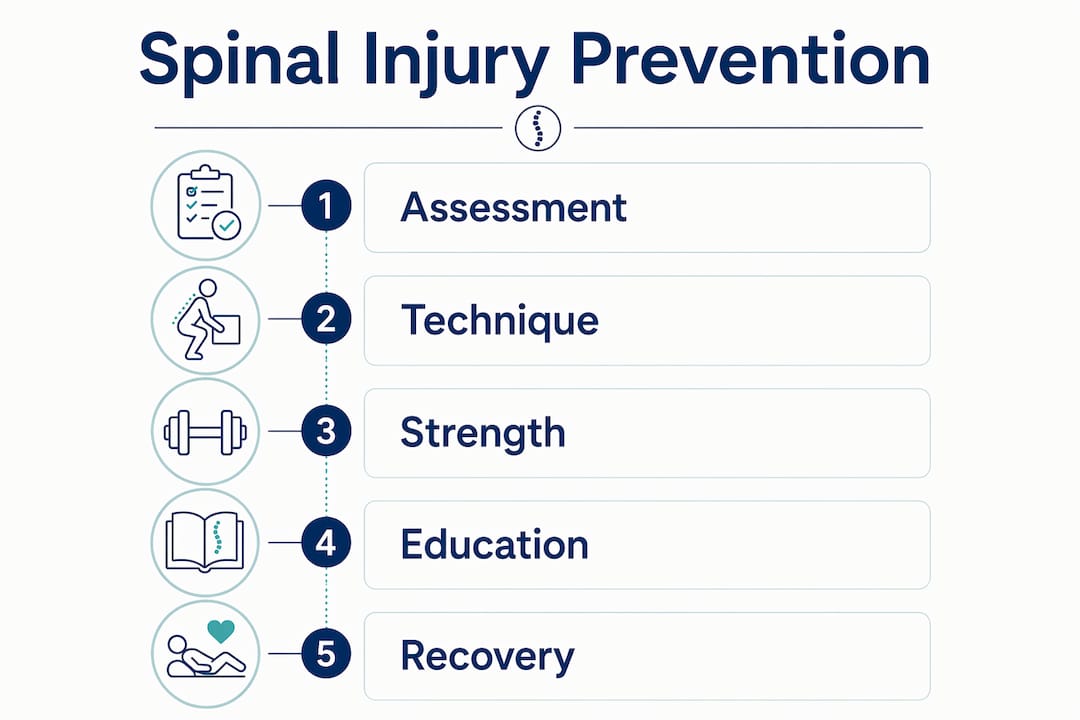
Technique first. Poor biomechanics cause most spinal stress injuries, even in athletes who are otherwise strong. A cricket fast bowler with a mixed action, a gymnast with excessive lumbar hyperextension, or a weightlifter who rounds under load — all are accumulating spinal stress that strength alone cannot offset. Sport-specific technique coaching is the highest-leverage prevention tool available.

Load management. Graduated training programs with scheduled low-load weeks are critical, especially for adolescents. Growth spurts change bone geometry faster than soft tissue adapts, creating a window of elevated fracture risk. Monitoring energy availability matters too — athletes in caloric deficit lose bone density faster than their training gains can compensate.
Core and spinal stabilizer training. The deep stabilizers — multifidus, transversus abdominis, and the pelvic floor — protect the spine under load. Targeted core stability work builds the muscular armor that keeps vertebral structures within safe stress ranges.
- Prioritize anti-rotation and anti-extension exercises over high-load spinal flexion
- Include single-leg and asymmetrical loading to expose and correct imbalances
- Schedule at least one full low-load day per week during peak training blocks
- Maintain adequate calcium and vitamin D intake to support bone remodeling
- Wear sport-appropriate protective gear, particularly in contact sports
Pro Tip: Programs that combine strength training with athlete education on movement mechanics have proven effective in reducing spinal injury incidence. Knowledge of your own movement patterns is as protective as any exercise.
Athlete education on proper lifting techniques, energy balance, and early symptom recognition significantly reduces spinal stress injury risk.
What does evidence-informed treatment look like for spinal injuries?
For most lumbar stress fractures, the standard path is nonsurgical: rest from aggravating activity, anti-inflammatory medication where appropriate, and targeted physical therapy. Healing times range from a few weeks up to six months depending on injury severity and how early it was caught.
Bracing can help in acute pain cases by limiting harmful spinal motion, but it is a temporary tool, not a solution. Prolonged brace reliance causes muscle weakness and delays full functional recovery. Any brace use should be paired immediately with active rehabilitation.
Rehabilitation protocols built on mechano-transduction principles use controlled movement to stimulate bone healing while avoiding painful motions. A structured five-part protocol typically rebuilds motor control and abdominal strength progressively, starting with low-load isometric work and advancing toward sport-specific loading only after healing milestones are confirmed.
- Phase 1: Pain-free isometric core activation
- Phase 2: Dynamic stabilization with minimal spinal load
- Phase 3: Progressive functional loading
- Phase 4: Sport-specific movement patterns
- Phase 5: Return-to-play with objective imaging confirmation
Surgery is reserved for cases that fail conservative management after an extended period, or where bilateral lesions cause chronic pain that prevents athletic participation. Given the morbidity involved, it functions as a career-saving option rather than a routine one.
Pro Tip: Return-to-play decisions should be guided by objective imaging evidence of bone healing, typically reviewed every 6–8 weeks, not by how you feel. Bone can feel fine before it is structurally ready for full load.
For nerve-related symptoms stemming from disc involvement, targeted nerve pain relief that addresses the structural cause tends to outperform symptom-only management.
When should you stop playing and get medical help?
Some symptoms are non-negotiable. Stop and seek evaluation immediately if you experience:
- Neurological deficits: numbness, tingling, or weakness in the arms or legs
- Severe, sudden-onset pain following trauma or a fall
- Loss of bladder or bowel control (a spinal cord emergency)
- Pain that persists at rest and wakes you from sleep
- Progressive weakness in a limb over days
On the field, suspected spinal injury management prioritizes airway, breathing, and circulation first, then minimizing spinal motion. Helmet and equipment removal follows standardized protocols — improvising increases secondary injury risk. Diagnostic imaging becomes necessary when neurological signs are present, when pain persists beyond expected recovery windows, or when a stress fracture is suspected based on clinical pattern.
Prompt intervention prevents a manageable injury from becoming a permanent one. The spine has a narrow margin for error when neurological structures are involved.
How Evertonchiropractic approaches spinal stress in athletes
Evertonchiropractic, led by Dr. Richard, an experienced Australian chiropractor, takes a structured, evidence-informed approach to managing sports-related spinal conditions. The clinic’s protocol starts with a thorough movement quality assessment to identify the specific biomechanical patterns driving each athlete’s spinal stress, rather than applying a generic treatment template.
Spinal adjustments are used to restore joint mobility and reduce compensatory loading patterns. Posture correction work addresses the upstream contributors to spinal stress, particularly in athletes whose sport demands repetitive asymmetrical loading. Patient education on biomechanics and injury prevention is built into every treatment plan, because an athlete who understands their movement patterns is far less likely to re-injure.
- Personalized rehabilitation aligned with progressive loading principles
- Motor control restoration as a foundation before sport-specific loading resumes
- Collaboration with multi-disciplinary teams for complex or surgical-adjacent cases
- Long-term spinal health maintenance strategies, not just acute symptom relief
Pro Tip: Chiropractic care for athletes works best when it is integrated into a broader rehabilitation plan, not used as a standalone pain-relief visit. Ask your provider how their approach connects to your return-to-sport timeline.
Evertonchiropractic’s commitment to evidence-based spinal care means treatment decisions are grounded in clinical findings and current research, with safety as the non-negotiable baseline.
What happens when spinal stress goes untreated?
Ignoring spinal stress injuries does not make them resolve faster. A stress reaction left unloaded can progress to a complete pars fracture. A complete fracture left unmanaged can develop into spondylolisthesis, where one vertebra slips forward on another, permanently altering spinal mechanics.
Disc herniations that are not rehabilitated properly tend to recur, often with greater severity. Chronic instability from repeated micro-trauma accelerates degenerative disc disease, which narrows the window for conservative treatment over time. Athletes who repeatedly return to sport before structural healing is confirmed face compounding injury risk with each cycle.
The long-term picture is not just about pain. Untreated spinal stress can limit the workload an athlete can sustain, reduce pace or power output, and ultimately shorten a career. For safe return to sport, structural healing must precede full loading, every time.
Evertonchiropractic: spinal care built around your athletic goals

Most athletes dealing with back pain want two things: a clear explanation of what is wrong and a realistic path back to full performance. Evertonchiropractic delivers both. Rather than offering generic pain management, the clinic builds individualized spinal care plans that account for your sport, your training load, and your long-term movement goals.
Dr. Richard’s approach combines spinal adjustments, posture correction, and progressive rehabilitation into a single coordinated plan. Athletes get personalized chiropractic treatment grounded in evidence, not guesswork, with every decision tied to measurable clinical outcomes. Whether you are managing an acute stress fracture or trying to prevent the next one, Evertonchiropractic gives you a concrete strategy, not just symptom relief.
Book a consultation with Evertonchiropractic and get a spinal assessment designed specifically for how you train and compete.
FAQ
What are the most common spinal injuries in athletes?
Lumbar spondylolysis, disc herniations, stingers, and lumbar strains are the most frequent. Spondylolysis is the leading cause of back pain in young athletes, particularly in sports involving repetitive spinal extension and rotation.
How long does recovery from a lumbar stress fracture take?
Healing times range from a few weeks up to six months depending on severity and how early the injury is identified. Return-to-play should be confirmed with objective imaging, not based on pain levels alone.
When is spinal imaging necessary for an athlete?
Imaging is warranted when pain is localized, one-sided, and worsened by extension; when neurological symptoms are present; or when pain persists beyond expected recovery. MRI is preferred for detecting bone marrow edema and early stress reactions.
Can chiropractic care help athletes with spinal stress injuries?
Yes. Evertonchiropractic uses spinal adjustments, movement assessments, and progressive rehabilitation to address the biomechanical causes of spinal stress, supporting both recovery and long-term injury prevention.
How can athletes prevent spinal stress injuries?
Graduated training loads, core stabilization exercises, sport-specific technique coaching, and adequate nutrition are the primary prevention tools. Early symptom recognition and avoiding the habit of playing through pain are equally critical.
Key Takeaways
Addressing sports-related spinal stress requires early injury recognition, evidence-informed treatment, and structured rehabilitation guided by objective healing milestones rather than symptom relief alone.
| Point | Details |
|---|---|
| Recognize injury type early | Localized extension-worsened pain signals bone stress; diffuse flexion pain suggests non-specific strain. |
| Load management is preventive | Graduated training with scheduled low-load weeks reduces fracture risk, especially during adolescent growth spurts. |
| Bracing is temporary | Braces limit harmful motion acutely but must be paired with active rehab to avoid muscle weakness. |
| Imaging guides return-to-play | Bone healing should be confirmed by imaging every 6–8 weeks, not by pain levels alone. |
| Evertonchiropractic’s approach | Dr. Richard’s clinic provides personalized spinal assessments and progressive rehabilitation tailored to each athlete’s sport and goals. |